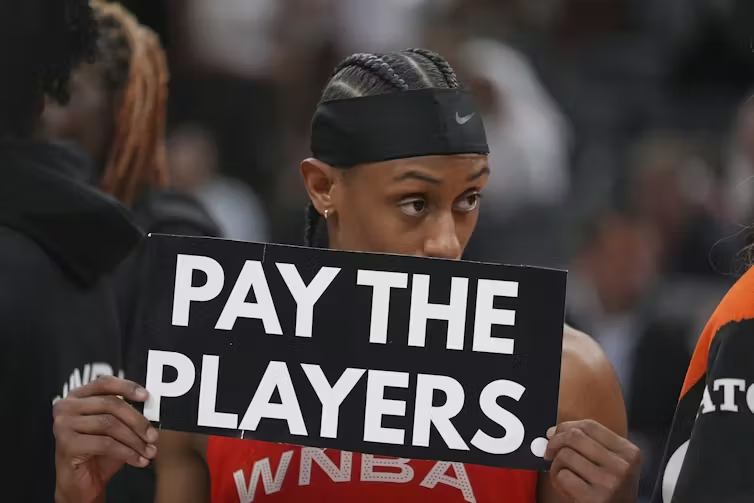
On March 20, the Women’s National Basketball Players Association (WNBPA) and the Commissioner of the WNBA announced the signing of a new Collective Bargaining Agreement (CBA), effective immediately, to span the league’s 2026 through 2032 seasons. This announcement comes as a relief to players and fans, who were preparing for the possibility of a significant season delay or cancellation due to ongoing negotiations. The Players Association, led by president Nneka Ogwumike of the Seattle Storm, has been protesting the previous CBA since at least the start of last season. All things considered, this new contract is another win for unionization.
In the two weeks since the tentative agreement was announced, most key details of the new agreement have been released to the public. Firstly, this contract includes the first instance of revenue-sharing in professional women’s sports history, which will hopefully ensure fairer compensation for players as the league continues to grow. This means that individual player and team finances are also being adjusted. The salary cap is increasing to $7 million per 12-player team for the 2026 season compared to $1.5 million in the 2025 season.
Additionally, in 2025, the league’s minimum salary was $66,079 and the supermax was $249,244. The new minimum salary starts at $270,000, while the supermax, intended for top talents like Ogwumike or the Las Vegas Aces’ A’ja Wilson, will increase to $1.4 million in the new season.
Because of the implementation of the revenue-sharing model, these numbers are projected to continue to increase over the next seven years of the agreement. Other elements of the CBA include housing stability, better health and safety benefits, two new developmental player roster spots, and increased award and recognition bonuses for both active and retired players.
These adjustments should make drastic improvements in the lives of players in the WNBA. Seriously, I can’t emphasize to you enough how absurdly low the previous salary cap was. It’s supremely unfair how underpaid these women were before, and they’re arguably still being drastically underpaid now, but that’s a discussion for another time.
I also still think a league-wide increase in roster size is necessary for the WNBA. This CBA increased the previous minimum of 11 players to 12, which is also the current roster maximum. I believe there is more talent available which is currently being overlooked even as the number of teams continues to grow. Adding expansion teams helps to alleviate this concern, but being taken in an expansion draft, being drafted, or even being signed at the start of the season does not guarantee a spot on the roster for the entirety of the season.
Additionally, by having a few more full-time personnel on the roster, it could reduce the need for hardship contracts, which often feel like players are being strung along by the team and the league. For example, Haley Jones was just drafted to the Toronto Tempo’s inaugural roster in the second round of the two-team expansion draft, but I worry about her future after she was signed, dropped, and re-signed again repeatedly with the Dallas Wings last year. She doesn’t deserve that, nor does any other player.
In all, the new CBA should make it more lucrative for players to support the WNBA as the league continues to boom in popularity. By providing these women with better benefits and opportunities, the league will actually continue to grow, and the players will be better protected as it happens. Additionally, if players are better supported by the organization, the experience will be elevated for fans, too.
I’m so excited to see this season progressing on schedule and to see these women making progress towards equitable compensation, though there is still a long way to go before we actually get there. I love the WNBA! This new agreement allows me to keep loving the WNBA! Yippee!
Featured image: The Conversation

Leave a Reply