

By EZEKIEL KINGSBURY
On Monday, November 6, at 4 p.m., creator of “King Cat Comics” John Porcellino and artist Lynda Barry hosted a panel of three comic artists: Mike Centeno, Keiler Roberts, and Sam Szabo. After a brief “hey” by Professor Chris Fink, John Porcellino introduced the discussion.
Centeno, from Caracas, Venezuela, deals with the “in-betweens” of life. “Futile Comics” explores themes of alienation and migration in short story format. Roberts has taught comics at the Art Institute of Chicago and has had her autobiographical comics published many times before. Szabo, from North Shore, Massachusetts, creates comics from short story to memoir format.
After John, “Big Boss” Lynda Barry took over. “Cartoonists are kind of solitary creatures,” she said, “so when we get together I go crazy looking at everybody’s head… seeing everyone who’s work I’ve admired.”
Mike Centeno started. His comic started with a long line at the Culver’s drive-thru, where someone in the line yelled about how the “gay commies and f*gs are taking over” before the gang headed to a campsite. There, the squad did some shrooms, and a shroom demon visits Centeno’s character. His comics were either very colorful and “trippy,” depicting the extreme highs and lows of a shroom experience, or black and white, depicting stupid conversations about nothing just as they might have occurred in real life. He juxtaposes the extreme of a trip, where everything is packed with meaning, with the banality of everyday life, where most things are about nothing. However, this latter option, where “nothing” happens, is just as important as those deep experiences.
Keiler Roberts went next. Brief scenes flash by: Dad sits at the counter eating chili, he looks funny. Objects with sentimental value are recollected. “It hurts the way nostalgia does. It’s a wanting that can’t be satisfied.” Her comic is filled with these quiet moments: she’s at the doctor, then she’s reading outside, then she gets three tampons and an applicator stuck. There is a narrative about creativity, but it doesn’t drive her plot forward in any truly linear fashion. These crudely drawn scenes are broken by colorful paintings and detailed sketches: doing laundry, a duck in a duck pond, sitting naked on the bed. The style fluctuates constantly, from realistic to abstract, to gouache painting, and back again.
When Barry asked if she listens to music while she works, she replied “I listen to the same song over and over again.” Barry commented that her work communicates that everything has a “little feeling.” She said “When I have a record, I wear it out to grab that feeling again. It’s almost like these things make you ache.” Roberts says that Barry put it into words better than she could have.
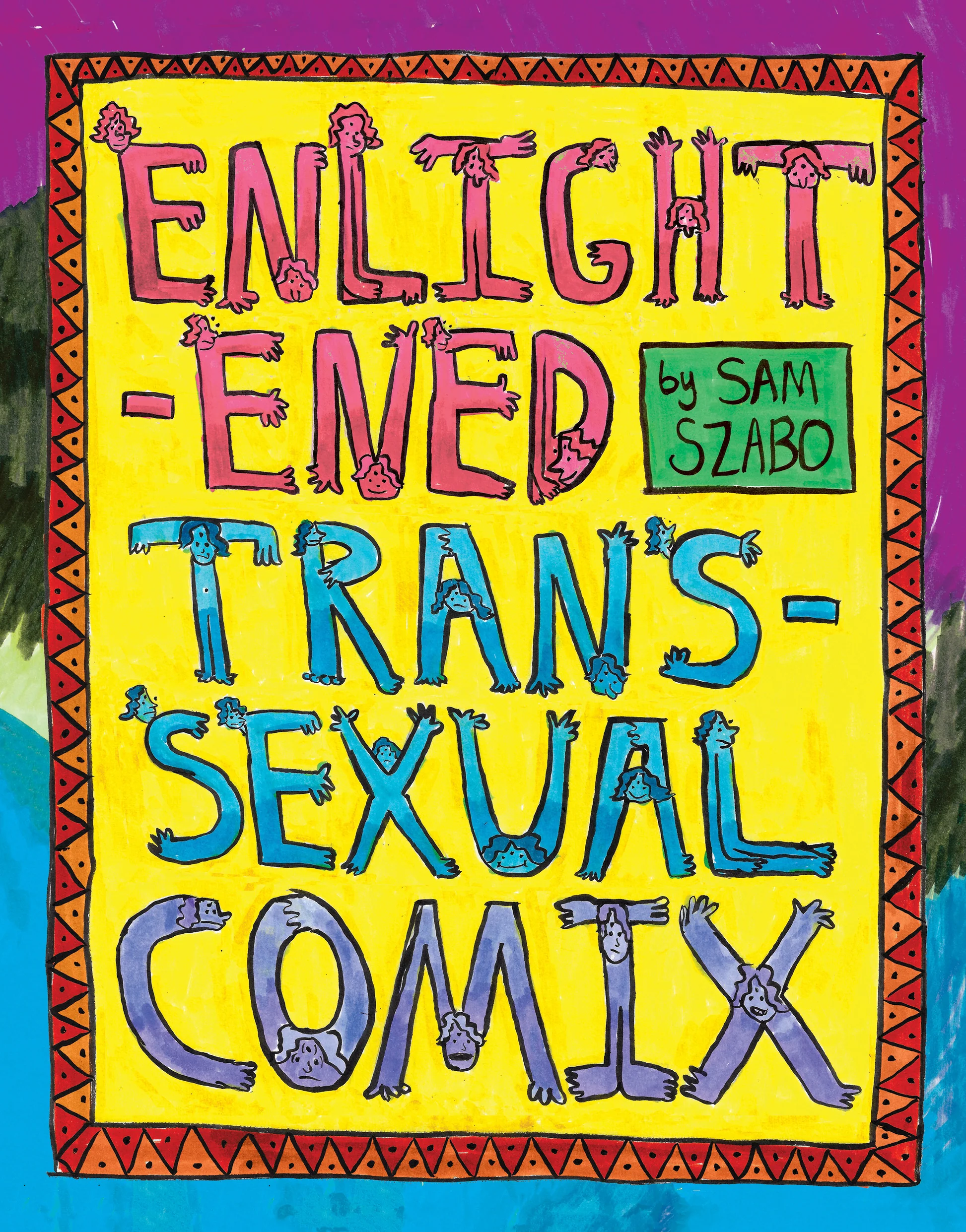
The final artist, Sam Szabo, showed two comics about her transsexuality. The first depicts a being, who says “Yes, I’m transgender, but I’m cool about it. Lots of trans people don’t like it when you say insensitive shit to them. Not me though. You mean nothing to me. You’re like an insect. Transitioning has revealed metaphysical truths that would melt your brain. I am sexier than God. That’s why you can’t hurt my feelings and I’m not going to cry. I have pierced the veil of subjectivity.” The other character replies: “So are you like, gonna cut your dick off or what?”
Lynda comments “There isn’t any particular way to do a comic. There isn’t any particular way to eat spaghetti.” The artists discussed how it was important to have a writing buddy of some sort, and how terrible it was to be in the same room when someone is reading your work.
Szabo shows another comic, about the time when she learned she was transexual. It was her first Halloween in Chicago, and she bought a ticket for an Insane Clown Posse to attend alone (author’s note: very brave, maybe a bit foolish). After buying a Katy Perry costume as a bit for the ICP show, she breaks down at realizing her transsexuality and drops some acid. She feels like an impostor going to the ICP show and thinks she is going to get beat up. Then, a kind juggalo says “First time? Hell yeah, brother, let’s get you up to the front!” Her character remarks “Bodies were packed so tightly I couldn’t move. I was not afraid to die.” One week later, at her first gender support meeting, she was scared and felt like an impostor. Then someone asked “First time? I like your mascara!” The depiction of the weird space inhabited in being a trans person (not enough of this, too much of that, trying too hard, not trying enough, etc.) was beautifully depicted by her work.
In sum, the event was a success, and a moving one too. You can support Centeno’s work at mikecenteno.com, Robert’s at keilerroberts.com, and Szabo’s on Instagram @brainboogerindustries.
On Monday, November 6, at 4 p.m., creator of “King Cat Comics” John Porcellino and artist Lynda Barry hosted a panel of three comic artists: Mike Centeno, Keiler Roberts, and Sam Szabo. After a brief “hey” by Professor Chris Fink, John Porcellino introduced the discussion.
Centeno, from Caracas, Venezuela, deals with the “in-betweens” of life. “Futile Comics” explores themes of alienation and migration in short story format. Roberts has taught comics at the Art Institute of Chicago and has had her autobiographical comics published many times before. Szabo, from North Shore, Massachusetts, creates comics from short story to memoir format.
After John, “Big Boss” Lynda Barry took over. “Cartoonists are kind of solitary creatures,” she said, “so when we get together I go crazy looking at everybody’s head… seeing everyone who’s work I’ve admired.”
Mike Centeno started. His comic started with a long line at the Culver’s drive-thru, where someone in the line yelled about how the “gay commies and f*gs are taking over” before the gang headed to a campsite. There, the squad did some shrooms, and a shroom demon visits Centeno’s character. His comics were either very colorful and “trippy,” depicting the extreme highs and lows of a shroom experience, or black and white, depicting stupid conversations about nothing just as they might have occurred in real life. He juxtaposes the extreme of a trip, where everything is packed with meaning, with the banality of everyday life, where most things are about nothing. However, this latter option, where “nothing” happens, is just as important as those deep experiences.
Keiler Roberts went next. Brief scenes flash by: Dad sits at the counter eating chili, he looks funny. Objects with sentimental value are recollected. “It hurts the way nostalgia does. It’s a wanting that can’t be satisfied.” Her comic is filled with these quiet moments: she’s at the doctor, then she’s reading outside, then she gets three tampons and an applicator stuck. There is a narrative about creativity, but it doesn’t drive her plot forward in any truly linear fashion. These crudely drawn scenes are broken by colorful paintings and detailed sketches: doing laundry, a duck in a duck pond, sitting naked on the bed. The style fluctuates constantly, from realistic to abstract, to gouache painting, and back again.
When Barry asked if she listens to music while she works, she replied “I listen to the same song over and over again.” Barry commented that her work communicates that everything has a “little feeling.” She said “When I have a record, I wear it out to grab that feeling again. It’s almost like these things make you ache.” Roberts says that Barry put it into words better than she could have.
The final artist, Sam Szabo, showed two comics about her transexuality. The first depicts a being, who says “Yes, I’m transgender, but I’m cool about it. Lots of trans people don’t like it when you say insensitive shit to them. Not me though. You mean nothing to me. You’re like an insect. Transitioning has revealed metaphysical truths that would melt your brain. I am sexier than God. That’s why you can’t hurt my feelings and I’m not going to cry. I have pierced the veil of subjectivity.” The other character replies: “So are you like, gonna cut your dick off or what?”
Lynda comments “There isn’t any particular way to do a comic. There isn’t any particular way to eat spaghetti.” The artists discussed how it was important to have a writing buddy of some sort, and how terrible it was to be in the same room when someone is reading your work.
Szabo shows another comic, about the time when she learned she was transexual. It was her first Halloween in Chicago, and she bought a ticket for an Insane Clown Posse to attend alone (author’s note: very brave, maybe a bit foolish). After buying a Katy Perry costume as a bit for the ICP show, she breaks down at realizing her transsexuality and drops some acid. She feels like an impostor going to the ICP show and thinks she is going to get beat up. Then, a kind juggalo says “First time? Hell yeah, brother, let’s get you up to the front!” Her character remarks “Bodies were packed so tightly I couldn’t move. I was not afraid to die.” One week later, at her first gender support meeting, she was scared and felt like an impostor. Then someone asked “First time? I like your mascara!” The depiction of the weird space inhabited in being a trans person (not enough of this, too much of that, trying too hard, not trying enough, etc.) was beautifully depicted by her work.
In sum, the event was a success, and a moving one too. You can support Centeno’s work at mikecenteno.com, Robert’s at keilerroberts.com, and Szabo’s on Instagram @brainboogerindustries.On Monday, November 6, at 4 p.m., creator of “King Cat Comics” John Porcellino and artist Lynda Barry hosted a panel of three comic artists: Mike Centeno, Keiler Roberts, and Sam Szabo. After a brief “hey” by Professor Chris Fink, John Porcellino introduced the discussion.
Centeno, from Caracas, Venezuela, deals with the “in-betweens” of life. “Futile Comics” explores themes of alienation and migration in short story format. Roberts has taught comics at the Art Institute of Chicago and has had her autobiographical comics published many times before. Szabo, from North Shore, Massachusetts, creates comics from short story to memoir format.
After John, “Big Boss” Lynda Barry took over. “Cartoonists are kind of solitary creatures,” she said, “so when we get together I go crazy looking at everybody’s head… seeing everyone who’s work I’ve admired.”
Mike Centeno started. His comic started with a long line at the Culver’s drive-thru, where someone in the line yelled about how the “gay commies and f*gs are taking over” before the gang headed to a campsite. There, the squad did some shrooms, and a shroom demon visits Centeno’s character. His comics were either very colorful and “trippy,” depicting the extreme highs and lows of a shroom experience, or black and white, depicting stupid conversations about nothing just as they might have occurred in real life. He juxtaposes the extreme of a trip, where everything is packed with meaning, with the banality of everyday life, where most things are about nothing. However, this latter option, where “nothing” happens, is just as important as those deep experiences.
Keiler Roberts went next. Brief scenes flash by: Dad sits at the counter eating chili, he looks funny. Objects with sentimental value are recollected. “It hurts the way nostalgia does. It’s a wanting that can’t be satisfied.” Her comic is filled with these quiet moments: she’s at the doctor, then she’s reading outside, then she gets three tampons and an applicator stuck. There is a narrative about creativity, but it doesn’t drive her plot forward in any truly linear fashion. These crudely drawn scenes are broken by colorful paintings and detailed sketches: doing laundry, a duck in a duck pond, sitting naked on the bed. The style fluctuates constantly, from realistic to abstract, to gouache painting, and back again.
When Barry asked if she listens to music while she works, she replied “I listen to the same song over and over again.” Barry commented that her work communicates that everything has a “little feeling.” She said “When I have a record, I wear it out to grab that feeling again. It’s almost like these things make you ache.” Roberts says that Barry put it into words better than she could have.
The final artist, Sam Szabo, showed two comics about her transexuality. The first depicts a being, who says “Yes, I’m transgender, but I’m cool about it. Lots of trans people don’t like it when you say insensitive shit to them. Not me though. You mean nothing to me. You’re like an insect. Transitioning has revealed metaphysical truths that would melt your brain. I am sexier than God. That’s why you can’t hurt my feelings and I’m not going to cry. I have pierced the veil of subjectivity.” The other character replies: “So are you like, gonna cut your dick off or what?”
Lynda comments “There isn’t any particular way to do a comic. There isn’t any particular way to eat spaghetti.” The artists discussed how it was important to have a writing buddy of some sort, and how terrible it was to be in the same room when someone is reading your work.
Szabo shows another comic, about the time when she learned she was transexual. It was her first Halloween in Chicago, and she bought a ticket for an Insane Clown Posse to attend alone (author’s note: very brave, maybe a bit foolish). After buying a Katy Perry costume as a bit for the ICP show, she breaks down at realizing her transsexuality and drops some acid. She feels like an impostor going to the ICP show and thinks she is going to get beat up. Then, a kind juggalo says “First time? Hell yeah, brother, let’s get you up to the front!” Her character remarks “Bodies were packed so tightly I couldn’t move. I was not afraid to die.” One week later, at her first gender support meeting, she was scared and felt like an impostor. Then someone asked “First time? I like your mascara!” The depiction of the weird space inhabited in being a trans person (not enough of this, too much of that, trying too hard, not trying enough, etc.) was beautifully depicted by her work.
In sum, the event was a success, and a moving one too. You can support Centeno’s work at mikecenteno.com, Robert’s at keilerroberts.com, and Szabo’s on Instagram @brainboogerindustries.

Leave a Reply