

Tazia Machl, Staff Writer
On November 23, the Beloit Daily News reported that the School District of Beloit received a two-star rating from the Department of Public Instruction, signifying that most students fail to meet state standards. Following the report, a surge of discontent echoed through the Beloit Community. Hundreds of parents, educators, and community members took to Facebook to voice their grievances against the school district’s administration.
“Keep voting in the same school board and you’ll keep getting the same results,” commented Lisa Brubaker-Trewyn, a Beloit resident.
Amongst the comments was a disconcerting narrative, one which shed light on a myriad of distressing student experiences within the Beloit school system. Alarming accounts included a blatant disregard for the Individualized Education Program (IEP) and inadequate transportation systems where children would literally be left behind. Additionally, the accounts unveiled a disturbing element of severe, unchecked bullying that compelled families to withdraw their children from the district altogether.
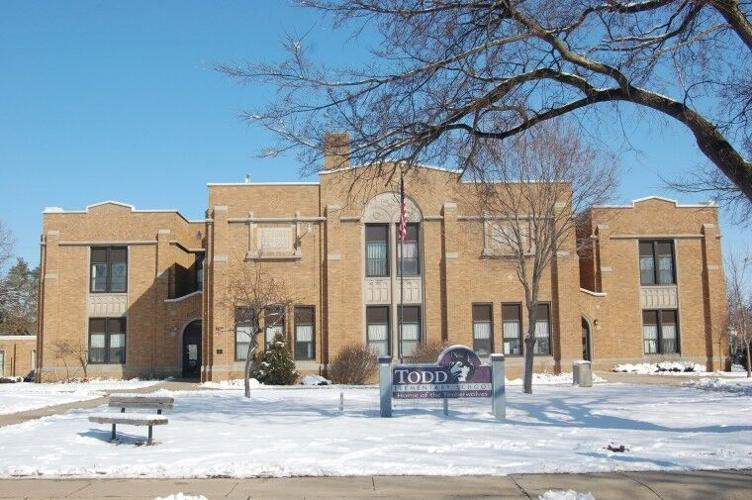
Holly Becker, a parent whose son was enrolled at Todd Elementary School, expressed concerns regarding what she perceives as unacceptable negligence.
“One day I received a call at 2:00 [p.m.] asking if my son had been dropped off. I was in shock because I knew when he had been dropped off. I explained that to them. Then they talked to my son and he had a bathroom accident at breakfast time and had been in the bathroom all day and not one person realized it. They didn’t even offer him different clothes.”
Numerous parents reported moving their children to the Lincoln Academy, a charter school boasting high Department of Public Instruction (DPI) report card scores and a rigorous curriculum.
Within the majority of comments was a prevailing culture of blame and resentment. Notably, a group named “Eyes on Beloit School Board,” self-identifying as whistleblowers and watchdogs for Beloit’s schools, urged users to follow. The group’s administrators, committed to unveiling perceived mistakes made by the school board, often employ inflammatory language and direct their focus on specific individuals. This discourse, oftentimes shadowing much-needed discussions about necessary reforms, emphasizes the ineffective dialogue regarding the city’s educational system.
Naomi Patten, a Beloit Memorial School graduate and member of the “Good Trouble of Beloit” group, voiced her concerns regarding the dramatic nature of the rhetoric that surrounds the school board.
“The page airs out the school district’s laundry. Is some of the stuff true?” Patten asked,
“Yes. But is it coming out in the right way and in a way that benefits kids? No.”
Within the Eyes on Beloit School Board account and the broader community, there exists a prevailing tendency to assign blame on the Beloit school board, particularly regarding funding. The school board is set to vote upon a referendum later in April—one of only five attempts that the school board has used to attain additional referendum funds.
Willie Garrison, the board’s superintendent has provided district residents with a survey giving three possible spending options for a potential referendum. The options, ranging from $9 million to $12.8 million, would cover transportation funds, maintenance funds, and update overall curriculum and classroom materials.
During a listening session regarding the referendum, Garrison stated that cuts and reconfiguration of funding have been made. However, without the referendum, crucial resources for students would have to be cut.
Calls for a referendum have not been met with open arms—historically, this does not come as a surprise.
Beloit School District voters have only approved two capital referendums and never an operational one. While an approval of the referendum would allow schools to make great changes in curriculum and student resources, numerous district residents are hesitant.
After all, the school board has long been a subject of controversy within the community–and rightfully so. The administration undoubtedly makes mistakes in program choice and funding allocations.
For instance, Rising Queens, a $53,000 program meant to help troubled girls, did not provide consistent results. APEX Learning, an alternative learning option to help those who failed classes, was described by student Damian Rowe as the “downfall to many of my friends.”
“When I was a tenth-grader I remember all of my friends stopped doing class work. When I’d ask them if they were afraid they wouldn’t be able to graduate, they would all just give me the same answer: ‘I’m just going to do APEX.’ It just gave them a super easy route that required zero effort and still allowed them to graduate on time. Many of them were perfectly capable of learning through regular classes, but they’d just spend time using their phone and filling out super easy questions and ultimately learning nothing in the process. I think that’s why we graduate decently but we are so low in every academic category.”
Undoubtedly, the Beloit School Board must make more informed choices regarding curriculum and behavioral programs- doing so would ensure higher academic outcomes with the same funding. However, the proposed referendum is not a failure that lies solely on the School Board. It is not a result of the implementation of the Rising Queens or APEX programs. Ultimately, the need for a referendum reflects upon the heartbreaking reality of Beloit’s child poverty rates and the immediate need for greater financial support from the state government.
According to the 2021 census, nearly 25% of Beloit’s children live below the poverty rate, and the district report card views 72.1% of students as economically disadvantaged. While these numbers do not inherently mean children are doomed to lower academic achievement, they certainly mean that teachers and administrators must provide more support–something impossible to do without higher funding.
“You have kids not knowing where they’re going to sleep that night,” a Beloit teacher stated. “They don’t have a lot to eat, and their parents work all day, and then you ask them to take a math test. They’re not going to care about the math test. Is the school district smart with their money? Obviously not. But the system is inherently unfair. It’s capitalism run amok.”
Of course, low-income students are capable of equivalent success to their wealthy peers. The Lincoln Academy, Beloit’s Charter School, exemplifies that, under the right circumstances, low-income students can prosper. Within the Beloit community, many view the Lincoln Academy as either a saving grace for their children or an additional financial drain on the school district.
Kristi Cole, the Lincoln Academy’s CEO, views the school as “another option,” providing Beloit students with greater opportunities.
“Having high expectations for ourselves and our scholars, as well as additional support, allows us to really go beyond what others think are possible.” Kristi Cole, the Lincoln Academy CEO stated.
The Lincoln Academy mirrors the demographics of Beloit’s public school system–yet, it functions on fundamentally different guidelines. Within the Lincoln Academy, support must be blended with accountability. While students are nurtured, they can always be expelled. This layer of consequence is absent in Beloit’s public schools, inherently making high rates of absenteeism and low test scores rare within charter schools.
The public school district is a different story–it is not an impossible fix. Obtaining additional referendum funds would transform the educational landscape. Teachers would gain access to enhanced support and training opportunities, something which Cole describes as a “crucial element of success in schooling.” Curriculums could be updated and resources for failing students would become more effective.
Certainly, the school board must reassess its allocation of existing funds to ensure that resources are distributed effectively. Yet, it is undeniable that additional funding is crucial for much-needed improvements.
For instance, Beloit Memorial High School does not currently have a driver’s education program, and public transportation throughout the city is incredibly limited. Rates of absenteeism are soaring, with 26.7% of students missing over 10% of the school year. Increasing funding would allow for more adequate transportation methods, improving absenteeism rates and overall academic results.
Unfortunately, the state of Wisconsin has failed to increase per-pupil funding for two consecutive years. Along with unprecedented inflation rates, the district’s financial troubles are of no surprise. In a city where students suffer from homelessness, poverty, and a lack of parental support, it is no wonder that academic proficiency will suffer as well.
The tendency to demonize the school board and engage in a blame game is counterproductive to the welfare of Beloit’s children. While criticism is essential, it is even more crucial to recognize that change requires support and reforms in numerous realms. Even though the school board has much room for improvement, ultimately, securing additional funds is a critical component of improving Beloit’s education system.
Students are clearly struggling, and there is an urgent need for intervention. The failing education system is setting Beloit’s children up for a cycle of poverty. Additional financial resources are a necessity to breaking the cycle, therefore ensuring a better future for Beloit.
Featured Image Credit: Beloit School District

Leave a Reply