

By SIONA SHISHAK
“The Dark Side of the Rainbow” refers to a phenomenon that occurs when one plays the Pink Floyd album “The Dark Side of the Moon” along with the 1939 film “The Wizard of Oz.” Fans of both works were surprised to discover that the music seemed to sync perfectly with the movie’s visuals. Despite popular theories, this was coincidental. But what if a film is intended to be accompanied by an album? What if a film is intended to be accompanied by any music at all?
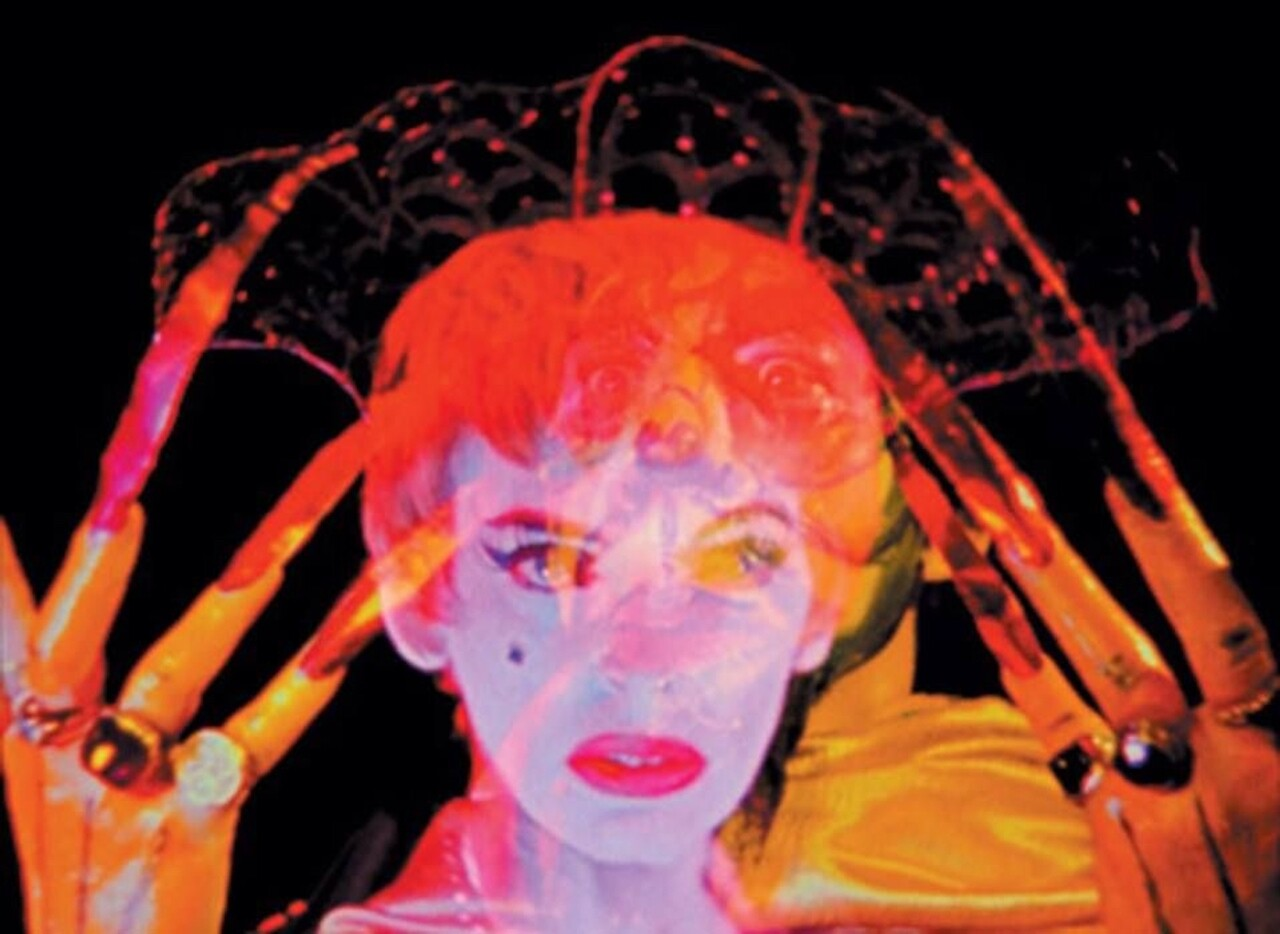
In 1954, Kenneth Anger released a project that he would later be defined by. Acting as the film’s director, writer, editor, and cinematographer, he had nearly ultimate control over his creative vision. “The Inauguration of the Pleasure Dome” is a 38-minute masterpiece, using innovative, whimsical visuals to convey an esoteric plot revolving around mythologized magic.
The obscure name of the film comes from an 18th-century poem, “Kubla Khan”, written by Samuel Taylor Coleridge after having a bizarre opium-induced dream. He was ahead of even the French new-wavers in terms of redefining cinema, finding footing in a contrastingly maximalist, spiritual, and provocative niche. His early work was just as experimental but more personal.
Much of it was related to the expression of his identity as one of the first openly gay filmmakers. Throughout much of his life, even identifying as a gay man was a punishable offense. Unfortunately, Anger was living in an anti-homosexual, puritanical culture, which caused him to be persecuted under obscenity charges after the release of 1947’s “Fireworks”. I’ll admit, however, that the content of the short is extremely graphic, likely inspiring later movies such as “Pink Narcissus” (James Bigwood, 1971), which similarly utilized surrealist imagery to discuss homosexuality.
One of the biggest inspirations for “The Inauguration of the Pleasure Dome” was the belief system of Aleister Crowley, who is credited in the film as “The Great Beast 666”. Perhaps the most infamous and influential of the English spiritualists, Crowley formed a religious movement called Thelema, which draws greatly from ancient Egyptian mythology and deities.
Magic and rituals are central to the practices of Thelemites, which is clearly demonstrated in the film. Anger had attended a themed party for which he dressed in drag as the goddess Hekate, often associated with magic. This night, themed “Come As Your Madness” sparked the idea for the film. Unfortunately, shortly before and during the film’s production, several figureheads of Thelema were passing away, including Crowley himself as well as his American equivalent, Jack Parsons. However, Anger convinced Parson’s widow, Marjorie Cameron, to play “The Scarlet Woman” in the film.
The film uses many unusual techniques, both visually, thematically, and auditorially. It was initially intended to be played on three screens but was later layered into one, leading to unique superimposition and further cementing the short’s dream-like quality. It also overlays and incorporates small sections of footage from “L’Inferno” (Francesco Bertolini, 1911).
Throughout its many re-releases, two official soundtracks have been used. The original is “Glagolitic Mass,” a more traditional orchestral soundtrack with an accompanying choir. The revised featured Electric Light Orchestra’s “Eldorado,” a bluesy progressive pop rock album. However, Anger experimented with many other soundtracks. In an interview late in his life, he said, “Rather than keeping it to myself, I’ll show the public, ‘This is one version, this is another version,’ and then I might take them both away and put something new on… I’ve done four different soundtracks for Inauguration of the Pleasure Dome.”
As part of a personal project, I’ve been similarly experimenting with replacing the soundtrack. As someone more experienced and comfortable with analyzing music and dialogue, I found it interesting to examine a visually led movie. Can full meaning be communicated through purely visual means, particularly when it comes to cinema? Could this have been a silent movie, and would it have been as effective as such?
These answers are unclear but worth discussing. Because of the lack of dialogue, it’s easy to mute the movie and play something else over it. After trying various options, I think I might finally have an answer. Zovi is an entirely underrated musical project that similarly experiments and crosses genres.
By her own description, she creates “…theatrical, industrial, novelty techno, pop fusion music from the future, and dreamlike ambient storytelling.” The 2020 release “Stories in Eternal Ash and Elsewhere” was created nearly exclusively by Zovi herself, as she took on the role of musical and lyrical composition and designing cover art. This album is intended to be examined in conversation with her previous, stating: “If that album was a dream, this album is… not a nightmare.”
Admittedly, this album is not for everyone. It’s uncomfortable at times and might feel harsh and uninviting to those unfamiliar with the style. It’s certainly not something that you can throw on in the background. But it provides a rich experience, especially in combination with the film’s stunning visuals. Because its runtime is shorter than that of the film, I recommend that you start on the third track, “Mirelle in Eternal Ash III: Vanity,” and end on “Inside the Carousel I: Being, Question, Answer.”
Just like “The Inauguration of the Pleasure Dome,” these tracks are innovative, underrecognized, and cause the audience to question the nature of reality. If you want to experience this for yourself, the 60s re-release is currently free on YouTube.
Featured Image: Still from “The Inauguration of the Pleasure Dome” (Kenneth Anger, 1954)

Leave a Reply