

BY CIAN McKEOWN
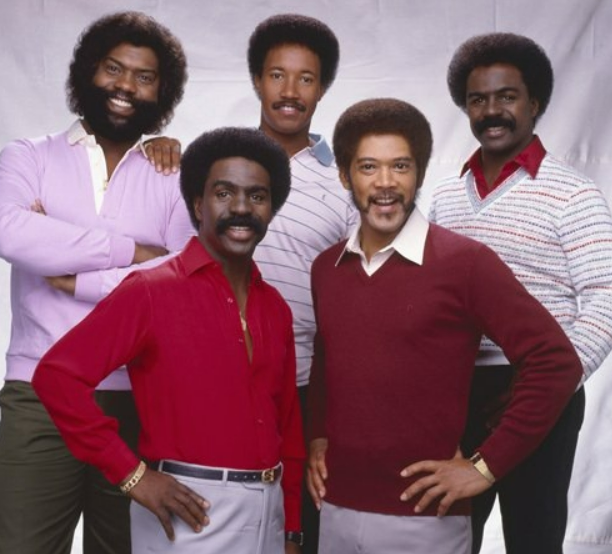
A question that has always bounced around whatever medium music discourse may take is what a band or artist has to achieve to be considered one of the greats. What combination of longevity, commercial and critical success, fan adoration, and following guarantees iconic status? Clearly, there is no algorithm or formula for this subjective achievement, because one of the greatest R&B vocal groups of all time, The Whispers have yet to be granted such an appraisal. They certainly have the resume, with fifteen top ten R&B singles, eight top ten R&B Albums, seven gold, two platinum, and one double platinum albums, as well as forty charting hit singles since 1970.
There are a few complicated reasons for this, perhaps it was their finest work being released just as disco was fading out of the mainstream due to an overtly racist and homophobic backlash to R&B music in general from the mainstream white pop market. Or the lack of crossover success in all of their work beyond their biggest hit, 1979’s disco anthem “And the Beat Goes On,” which reached number nine on the Billboard Hot 100 and went on to reach platinum status. To understand fully why the Whispers remain so underrated, it’s important to grasp what led to their greatness in the first place.
There is a collage that hangs in the St. Louis Art Museum by artist and academic Kerry James Marshall entitled “Watts 1963.” The museum notes describe it as a “[C]olorful, mural-sized canvas [that] depicts Nickerson Gardens in the Watts neighborhood of Los Angeles. Artist Kerry James Marshall’s family lived there for two years after moving from Birmingham, Alabama. Marshall created “Watts 1963” as part of his “Garden Project,” a series of five paintings that considers the irony of garden-named housing projects in Los Angeles and Chicago.”
This astounding work is a snapshot of the group’s inception. Growing up in housing projects in Watts not dissimilar to the ones Marshall experienced as a child, the two core members of the Whispers to this day came to California at a very young age from down south as well, hailing from Texas. Identical twin brothers and lead vocalists Wallace “Scotty” Scott, and Walter Scott, the group’s founding members, recall the formation of The Whispers at a talent show, organized by Los Angeles R&B DJ Hunter Hancock: “In the early ’60s and Middle ’60s, ‘Motown’ was what every kid dreamed about. We wanted to be like The Temptations, The Four Tops. So, it all started in the early 60s when Scotty and I were singing in a talent show. At that time, we went by the name ‘The Scott Twins.’ So, there was another group called ‘The Eden Trio,’ which consisted of three guys performing as a trio then. So, while we were waiting backstage to do our respective acts, all five of us began singing together, backstage.”
Walter mentioned this fact in a podcast interview this past year and it will never cease to fascinate that despite their longevity, the Whispers came together almost by chance. Gordy Harmon, Marcus Hutson, and Nicholas Caldwell were the three members of The Eden Trio, and soon the fusion of the two groups was complete. The new name for the group was suggested by another Los Angeles record executive, who remarked upon how the smoothness of their harmonies sounded almost like a whisper.
Soon, the group signed to the small Los Angeles record label Dore and debuted in 1964 with “I Was Born When You Kissed Me.” Another standout from their time on Dore was the doo-wop-inflected “As I Sit Here.” Speaking about their other musical influences besides the Temptations, Walter says: “My Dad was just a ferocious Jazz enthusiast. So we listened to a lot of Jazz, he liked Miles Davis. He was extremely disappointed when we wanted to go into R&B.” The group had their first hit, a regional single called “The Time Will Come” released on Soul Clock and written by Nicholas Caldwell, after graduating from Jordan High School in Watts, California.
However, these releases drew very little buzz from the national record-buying public, and after a couple of years and an invitation from Sly Stone to join the San Francisco music scene, the Whispers soon jumped ship to another modest label, Soul Stack. Despite its limited success, Dore saw names pass through such as legendary leader of The Tijuana Brass Herb Alpert, and sixties pop production titans like Lou Adler and Phil Spector. Dore proved to be a training ground for future success for the Whispers as well, as in 1970 under the stewardship of producer Ron Carson, the band produced their first top ten R&B hit, the sultry and melodramatic ballad: “Seems Like I Gotta Do Wrong.” Carson then moved the group in the early seventies to New York City to record for the Janus label. The group’s first full-length album, 1972’s Life and Breath, contains the pillowy soft smooth soul and grooves that the Whispers would become known for. The voices of the two brothers soar on “Somebody Loves You” and “P.O.W-M.I.A- Prisoners of War-Missing in Action,” the latter no doubt informed by Walter’s eighteen-month service in Vietnam from 1968-69.
During this period, Leaveil Degree, a former member of the pop-soul hitmakers Friends of Distinction, known for their early 70s classic, “Grazing in the Grass,” joined the group. Gordy Harmon, one of the founding members and a man whom Walter Scott argues “really started the group,” left in 1973 after a car crash caused an injury to his larynx, affecting his ability to sing properly. Degree became an instant asset to the band as they made the logical move to Philadelphia in the mid-seventies.
While they produced some phenomenal smooth soul, chart success largely eluded them during a time when they should have been dominant recording stars. Although they did achieve a top ten Dance and R&B hit with “One for the Money (Part 1)” in 1976 from the album of the same name, another standout from this era is their final album for Janus, 1974’s “Bingo,” which features members of the iconic Philly Sound studio collective MFSB, including Earl Young on drums, who invented the drumming style known as “four on the floor,” which became the backbone of disco. The title track and “Mother for My Children” deserve to be considered among the finest songs in the Philly Soul oeuvre. Beginning in 1976 with “One for the Money,” the band began recording for Dick Griffey and host of the popular dance show “Soul Train” Don Cornelius’ “Soul Train Records.” They scored another top ten R&B hit in 1977 with a punchy, horn-driven dance cover of “Make It With You” by soft-rockers Bread.
The group’s primary success came in the form of collaboration with one of the great unsung heroes of R&B in the late seventies and early eighties, a man by the name of Dick Griffey, who claimed that he was at one point “the premier African-American concert promoter in America.” He parlayed this success with many Motown acts, including the Supremes and Stevie Wonder into becoming the talent coordinator for Don Cornelius’ popular “Soul Train” program. From this, Griffey and Cornelius founded Soul Train Records. Despite some initial success, Cornelius soon wanted out of the record business. This resulted in Griffey buying out Cornelius and founding SOLAR(or Sound Of Los Angeles Records) which became a breeding ground for the finest R&B hitmakers of the era, including Dynasty, Shalamar, Midnight Star, Lakeside, and of course the Whispers.
The Whispers signed to SOLAR in 1978. Right out of the gate, they produced their biggest hit: “And the Beat Goes On” a classic of late seventies funk and disco that endures to this day. Featuring what is considered one of the funkiest basslines ever recorded. Nicholas Caldwell tells a story of a recording session for SOLAR in the late seventies in which Whisper’s bassist, producer, and arranger Leon Sylvers III(arguably the primary architect of the Whisper’s funk and dance-oriented SOLAR sound) swung a mallet at a kick drum for six straight minutes in time to achieve a specific rhythmic kick drum sound. According to Caldwell, if one hit was out of time, Sylvers would do the whole thing over again. His perfectionism is present in the best SOLAR recordings, as the grooves are among the tightest in R&B history. The Whispers have also been backed up by longtime guitarist Emilio Conesa and drummer Richard Aguon.
The group also released their breakout LP with SOLAR in 1978, “Headlights,” which showcases some of the band’s best disco grooves, heartwrenching smooth soul ballads, expert drum work, and the ever-present bubbling bass of Leon Sylvers III. From the smooth and danceable “(Let’s Go)All the Way” and the stutteringly funky title track that is nearly a send-up of the Ohio Players’ “Skin Tight.” The record is the introduction of a trend that would exist in most of the group’s albums for the rest of their career, the well-oiled oscillation between upbeat funk, disco, and dance tracks to some of the best quiet storm love ballads of their era. The Whispers also engaged in charity work during this period, following their smash-hit tribute to late soul legend Donny Hathaway in 1978, entitled “A Song For Donny” they established the Donny Hathaway Scholarship fund that provided scholarships to underprivileged youth.
Despite the demise of disco on the pop charts at the dawn of a new decade, it remained very much alive on the R&B charts. The Whispers were one of the era’s top examples of a group that wasn’t afraid to keep making funky dance music during a time when it was largely rejected by the white market. The band returned in 1981, releasing three of their most seminal and standout LPs: “Imagination,” “Love Is Where You Find It,” and “This Kind Of Lovin’.” “Imagination” was the group’s most dance-focused album yet, featuring blistering disco stompers like the title track, “It’s A Love Thing” and “I Can Make It Better” with “It’s A Love Thing” landing in the R&B top forty. These albums feature the same energized rhythm section and horns of their seventies releases, but now tasteful Moog synths add another layer of funk to the layered sound of the Whisper’s classic material.
The band also began filming more creative and numerous music videos at the start of the decade, with Nicholas Caldwell saying in an interview with Dick Clark in 1980 on the long-running music and dance show “American Bandstand” that he was primarily responsible for the choreography in the band’s live act and music videos, a primary distinguishing factor for them during their hitmaking years. Caldwell also penned one of the group’s punchiest slow jams: “Lady.”
The group’s next release, “This Kind Of Lovin,” contained another top-twenty R&B hit single, and this momentum carried the band into creating what is arguably their finest album: “Love Is Where You Find It.” It finds the Whispers at the height of their eighties grandeur, basking in layers of funky synths on tracks like “Turn Me Out” and “Emergency” while crooning their hearts out on ballads like the title track. The album took the top spot on the Billboard R&B Chart, scoring the quintet two additional top twenty R&B hits and producing some of the band’s most iconic, striking, and uniquely eighties music videos.
After the prolific burst of energy and hits that was in 1981, the band took two years to produce their next LP, 1983’s “Love for Love.” One is brought to the opening shots of the music video for the album’s lead single, “Keep On Lovin’ Me” where the group, immaculately dressed in eighties attire, struts down the street to the song’s thunderous opening synth drop. The song also reached number four in R&B and number eighteen in pop, another staggering achievement for the group. The hits kept coming with the release of 1984’s So Good, an effective, yet busy record that shows the band’s producers laying the synths on incredibly thick, which leads to an occasionally dated, yet still funky sound. Following the release of five albums in only three years, the band pulled back and took their time preparing for their next release.
The wait was worth it for fans as 1987’s “Just Gets Better With Time” saw the Whispers storm back to their place atop the throne of R&B. Going platinum in the United States, the album’s lead single, the big-drum cookout classic “Rock Steady” showed the band fully evolving into their eighties sound while simultaneously tightening up and in some cases restraining the synth in contrast to their previous album. It became their only top-ten pop hit, peaking at number seven and staying on the charts for twenty-three weeks, as well as spending a week at the top of the R&B Hot 100. This record saw the band take their place as the elegant elder statesmen of R&B, and the album title rang true as the record still stands as a triumphant comeback for the band.
Leaveill Degree remarked upon the reason behind the Whispers’ continued longevity in a radio interview: “Well, I think the secret for us is one, humility. If you’re a humble person and you don’t believe your press clippings; a lot of artists, a lot of groups that break up. You know somebody comes in and they say: ‘You know something you really don’t need them, you know you could be by yourself, man. And you could do the same thing that you’re doing with them and make more money and you’d be the greatest thing since sliced bread.’ And we’ve never- we’ve always been humble.”
On a warm fall day at the Oakland-Alameda County Coliseum in 1989, the Whispers opened game two of Major League Baseball’s World Series. The Whispers were triumphant, celebrating a twenty-year run on the charts and preparing to release what would be their final gold record, 1990’s “More Of The Night.” Soon tragedy would strike the group as Marcus Hutson would depart in 1992 following a prostate cancer diagnosis. Hutson would succumb to his illness in 2000, and the band vowed to never replace their fallen friend, performing as a quartet. In 2002, the band was honored with an NAACP Image Award, and in 2003 and 2014 respectively they were inducted into both the Vocal Group and R&B Music Hall of Fame.
Following their hitmaking years, the Whispers have continued to tour relentlessly on the nostalgia circuit, still delivering a fantastic show in whatever city they happen to find themselves in. After over sixty years as an active group, the Whispers have never missed the downbeat, a testament to their timelessness as singers and musicians. However, due to the nature of record royalties, especially for R&B musicians, one can only assume that the Whispers are less than obscenely wealthy.
Despite the tragic loss of another original member, Nicholas Caldwell, in 2016, the group has continued to perform as a trio. They have even begun to re-record some of their classic songs in an effort to reclaim their master recordings, owned by UniDisc Music. Scotty says: “We simply want to benefit the way we should have been benefiting 30-40 years ago. Had we been treated fairly back then we probably wouldn’t have to go through this.”
The Whispers continue to keep a public profile, appearing on podcasts, and touring with their legendary stage show. A mainstream critical reappraisal still eludes them, as does a call from the Rock ‘n’ Roll Hall Of Fame. I hope that it will come when they are still here to appreciate the honor. The Whispers will be performing at the MotorCity Casino Hotel in Detroit, MI on March 6.
Featured image: The Whispers; solarradio

Leave a Reply