

By EMMA LAUS
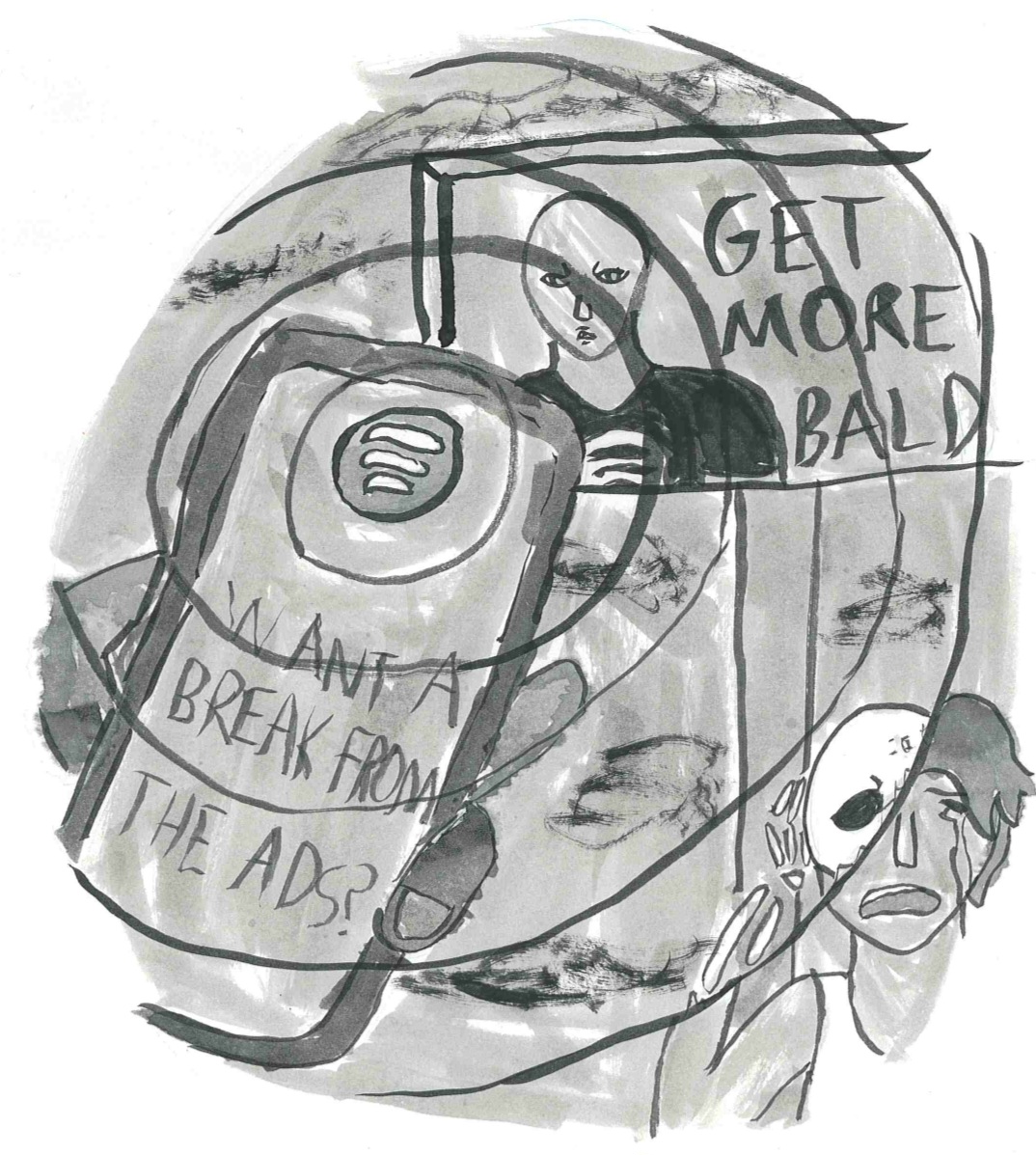
Online, everything is easy and nothing is exciting. I hate feeling uninspired by music, but as the Spotify algorithm grows stronger and more and more features are added, I feel like I’m appreciating music less. The quest to discover new music feels repetitive and fruitless; every playlist recommends the same songs. Even if I miraculously hear something I like on Discover Weekly, I hate that it came from an AI powered algorithm. There is no romance or true personalization in that at all. I’m constantly reminded of the limits of the algorithm and the lack of emotion that comes with it.
The MP3 file format was introduced in the early 90s, allowing music to be compressed on files, which took up less space on devices. This enabled listeners to share music online more easily, beginning the departure from the reign of physical media. In 1999, the music sharing platform Napster was introduced, which allowed users to download a song off of a friend’s computer for free. Although it was technically pirating, the response among artists was varied. Metallica famously filed a lawsuit against the company, while Courtney Love argued in favor of it. Love cited the predatory nature of major record labels, calling them the real pirates, according to The Guardian. No matter how it was viewed, Napster undoubtedly made music more accessible and allowed art to be shared for free, working around the industry’s traditional economic structure.
Labels weren’t entirely opposed to file sharing, as it had become evident this was the future of music consumption. But because the labels weren’t making money off of Napster’s model, the platform shut down in 2001. Subscription services like iTunes started emerging, where individual songs could be purchased and listened to on one’s device. There wasn’t really a recommendation algorithm in the early days.
Then, in 2008, Spotify was launched. Spotify operates as an ad tech company; essentially, they sell ads rather than music. This structure has allowed them to grow into a multi-billion dollar business. Artists are paid according to streams, which means for smaller artists, getting on Spotify created playlists with lots of saves is often a priority. This incentivizes artists to release more singles or music specifically created for playlists in the hope that users who are listening to the Spotify playlist will come across their music and convert to fans.
In an article titled, “The Power of the Spotify Playlist,” the author Udoka Nwansi writes, “it should…be acknowledged that these personalized algorithms can keep lesser-known artists from gaining more visibility if they don’t have larger labels to lobby for them.” According to iGroove, major label artists are disproportionately represented in Spotify created playlists. This is likely due to the contracts between major labels and Spotify, where the streaming service must pay the labels a set fee, regardless of whether the number of streams to support this fee was reached. Therefore, Spotify is incentivized to promote these songs.
Clearly, certain artists are prioritized over others in the algorithm. I’ve also noticed that Spotify promotes their own playlists much more than user-created playlists. Everything is made easy for listeners, meaning we are not encouraged to dig through the platform and find music on our own.
With features like Daylist, Discover Weekly, Daily Drive, and mixes for every emotion and basically everything ever, the app is designed to have users listening as much as possible. Spotify does all the work for you: there are artist radios, song radios, the list goes on and on. I find that with an endless supply of playlists, my music consumption feels passive, reduced to background music for every part of the day, which I’d argue is exactly what Spotify wants.
Recently, I’ve been trying to be more intentional while listening to music — letting in sounds from the outside world and deciding not to have curated playlists playing at every moment. This has required, for example, taking off my headphones in a coffee shop and listening to whatever the baristas are playing. Which, to be fair, might be “Coffee House Indie Mix.” Over the summer one of my coworkers (shout out Mark) was probably the biggest music enthusiast I’ve ever met and got so much joy from playing his favorite music during opening. He had limitless recommendations and a story to tell about every single band. Having a real connection to every song, remembering exactly where you first heard it or who recommended it to you, is so special; that’s my goal going forward. This isn’t a radical idea at all, but I think with streaming less thought goes into media consumption in general. While I probably won’t delete Spotify anytime soon, becoming aware of this is hopefully a step in the right direction.
Featured image: Betty Cavicchia’28

Leave a Reply