

By PALASH MAMTANEY
The U.S. government has been shut down since Oct. 1, 2025 amid a bitter political standoff that shows no signs of ending soon. Hundreds of thousands of federal workers are furloughed, important public services have slowed or halted, and millions of Americans face uncertainty as lawmakers remain deadlocked over funding and policy disputes.
A government shutdown occurs when Congress does not authorize spending for federal agencies before the start of the fiscal year. Without funding, many government operations must pause, except for essential services such as military defense, air traffic control, and Social Security payments. Hundreds of thousands of federal employees are furloughed, meaning they are placed on temporary unpaid leave, while others are forced to work without pay. The suspension causes delays in everything from national parks and food safety inspections to processing of student loans and veteran benefits.
The shutdown stems primarily from stark disagreements over healthcare funding. Democrats want to extend Affordable Care Act (ACA) subsidies, which help millions afford insurance, and to repeal parts of the “One Big Beautiful Bill” that cut Medicaid. Republicans insist on a “clean” continuing resolution without such policy riders, emphasizing fiscal restraint. Senate Democrats, holding power in the upper chamber, have blocked the GOP’s clean bills, seeking longer-term health protections.
President Trump has boldly labeled the crisis the “Democrat Shutdown,” blaming Congressional Democrats for refusing to compromise on healthcare and spending demands. “I can’t believe the Radical Left Democrats gave me this unprecedented opportunity,” Trump said, pledging to enact significant cuts to federal jobs in agencies identified as “Democrat Agencies.”
He further authorized freezing $26 billion in federal funds, particularly targeting projects in Democratic-led states like New York, California, and Washington. “Billions of dollars can be saved,” President Trump wrote on Truth Social late on Wednesday. Among the frozen funds are billions for infrastructure projects such as New York City’s Gateway Tunnel and billions earmarked for climate and green energy initiatives, which the administration dismisses as “Green New Scam” spending.
Senate Majority Leader Chuck Schumer and House Democratic Leader Hakeem Jeffries vehemently blame Republicans for the shutdown, calling it “ideologically driven” and “punishing the American people.” “He is using the American people as pawns, threatening pain on the country as blackmail,” Schumer said.
A fierce point of contention has been Republican claims, echoed by President Trump and Vice President JD Vance, that Democrats’ healthcare demands would provide free care to illegal immigrants. These assertions have been labeled false by Democratic leaders and independent analysts.
While Democrats have pushed reversing restrictions on Medicaid coverage for certain lawfully present immigrants, such as refugees and trafficking victims, they have not proposed expanding coverage to undocumented immigrants, who remain ineligible for federally funded health programs. Experts clarify the confusion stems from a Trump-era law cutting Medicaid access for some immigrant groups, which Democrats seek to restore.
However, no proposal includes healthcare benefits for undocumented people, consistent with longstanding federal law that limits such coverage. States with Democratic leadership have extended some state-funded healthcare to immigrant children or pregnant women regardless of status, which fuels political rhetoric but falls outside federal program rules.
The Senate remains deadlocked. Despite repeated votes, neither party has secured the 60 votes needed to pass funding bills. Lawmakers have adjourned, delaying further action until mid-October, prolonging the shutdown uncertainty.
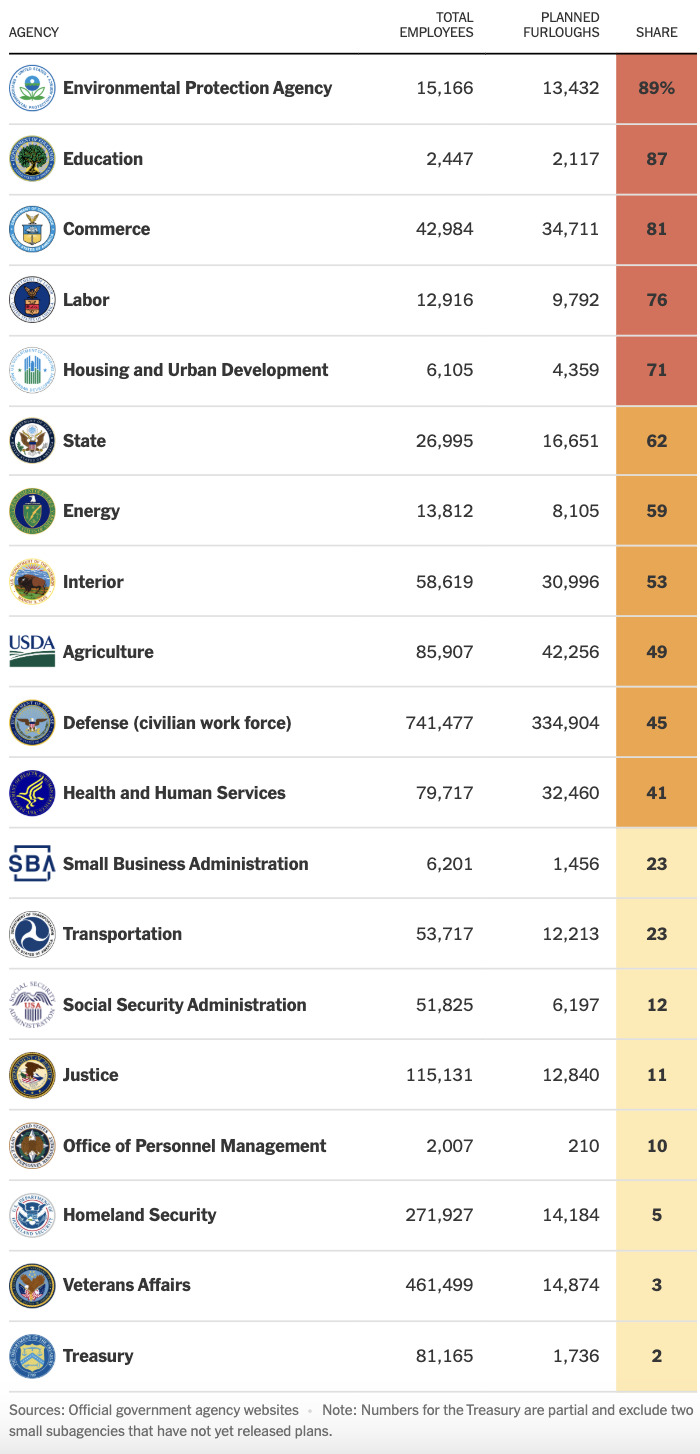
The shutdown has furloughed about 750,000 federal employees, nearly 40% of the federal workforce. Essential services continue at reduced capacity, but agencies such as National Institute of Health, the Department of Veterans Affairs, and the Small Business Administration have cut back or paused programs. TSA and border patrol officers work without pay, facing growing frustration.
Featured image: New York Times

Leave a Reply