

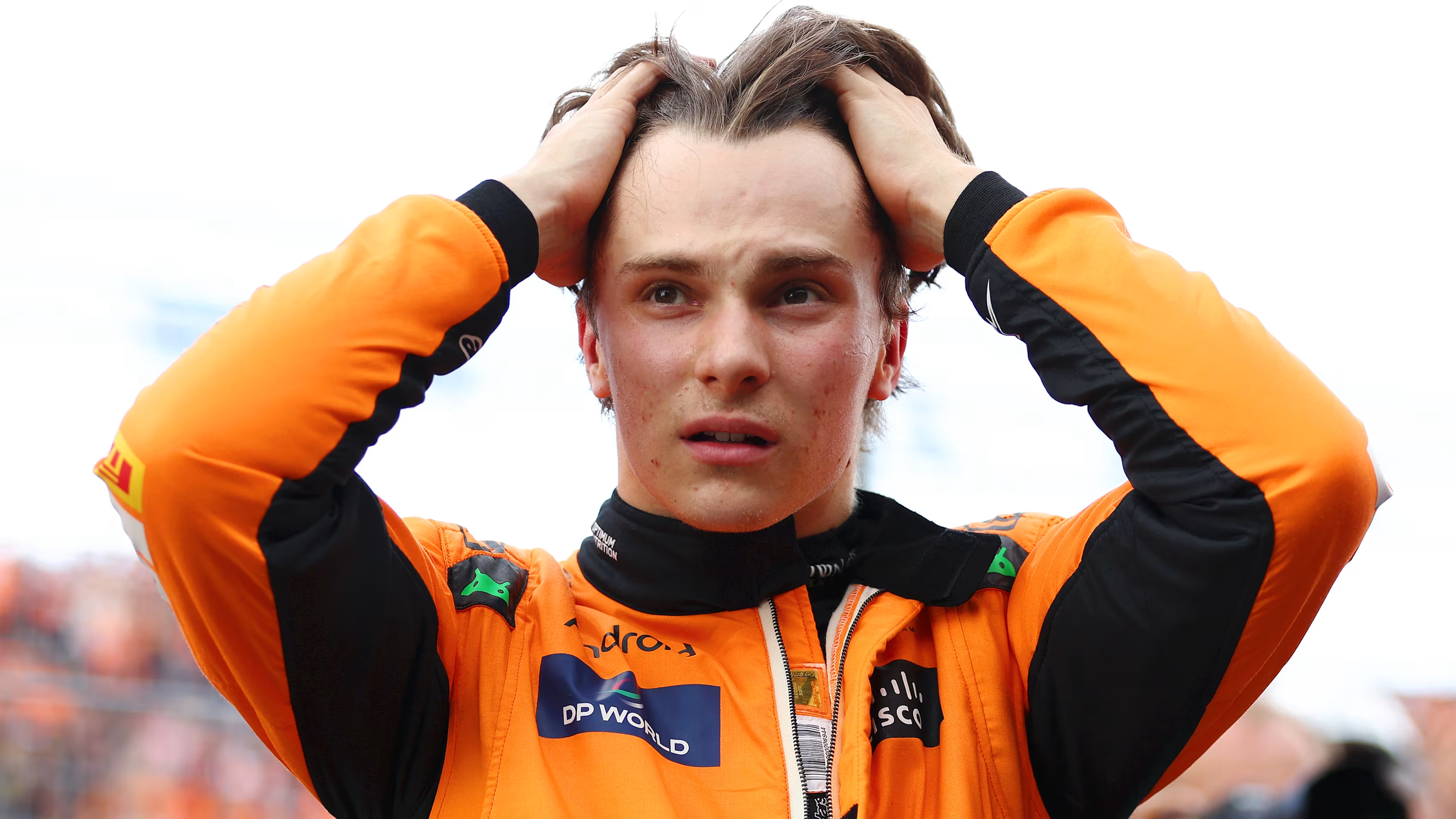
The 2025 Formula 1 season has seen accusations of sabotage like never before. Sure, F1 has always had its fair share of fan theories and online drama, but this year, with overanalyzed pit stops, wild X threads, and overall social media meltdowns, things have reached a whole new level. It’s been a season that’s tested the limits of both media credibility and fan patience.
From the very start of the season, it became clear that the driver’s chances were slim when competing with the fastest car: McLaren. With that kind of dominance, only three drivers emerged as the true title contenders: reigning World Champion Max Verstappen, last season’s runner-up Lando Norris, and Oscar Piastri, who has recently transitioned from being viewed as McLaren’s “second driver” to a genuine championship threat.
As the season unfolds, accusations of sabotage have dominated both fan discussions and media coverage, particularly targeting Red Bull and McLaren. On social media, especially X, fans have been dissecting every rumor about Red Bull’s internal drama and management chaos, convinced that team tension is spilling over into car performance and race strategy. But let’s be real, accusations of sabotage and the infamous “second-seat curse” at Red Bull are nothing new. Like clockwork, every time Red Bull signs a new teammate for Max, the internet lights up with theories. And while some fans argue that the team’s car and strategy are inherently flawed, Max Verstappen’s relentless dominance in the previous season and his comeback in this season have been enough to overshadow talks of sabotage.
Meanwhile, McLaren has been under more scrutiny than ever this season. Fans and commentators alike have accused the team of favouring Lando Norris over Oscar Piastri, citing differences in race strategy, pit-stop timing, and upgrade distribution. Piastri had held the top spot in the championship for most of the season — until the last race, where he dropped to second behind Norris by just one point. That shift has only fueled fan theories that McLaren is prioritizing Norris’s shot at the World Drivers’ Championship over Piastri’s.
Team orders, like calls to swap positions after one of Norris’s slower pit stops, definitely make it look that way from the outside. But with proper context, those accusations don’t fully hold up. Piastri’s drop in performance during the latter half of the season isn’t exactly new — it’s been a pattern throughout his three years in F1. He tends to start strong but struggles to maintain momentum in the second half. Still, none of that has stopped fans or the media from turning every strategic call into another “sabotage” headline. These allegations, though lacking verifiable proof, have gained traction in an era where online commentary can transform minor performance gaps into full-blown narratives of betrayal, serving as proof that in modern F1, perception often overtakes performance.
At the end of the day, whether it’s Red Bull’s “second-seat curse” or McLaren’s alleged favoritism, most of these sabotage stories say more about the fandom than the teams themselves. F1 has always been a mix of politics, performance, and pure chaos, but now more than ever, every rumor feels like breaking news. Maybe that’s part of the fun: Formula 1 isn’t just a sport anymore, it’s a full-time conspiracy theory.
Featured image: F1

Leave a Reply