

Ezekiel Kingsbury, Editor-in-Chief
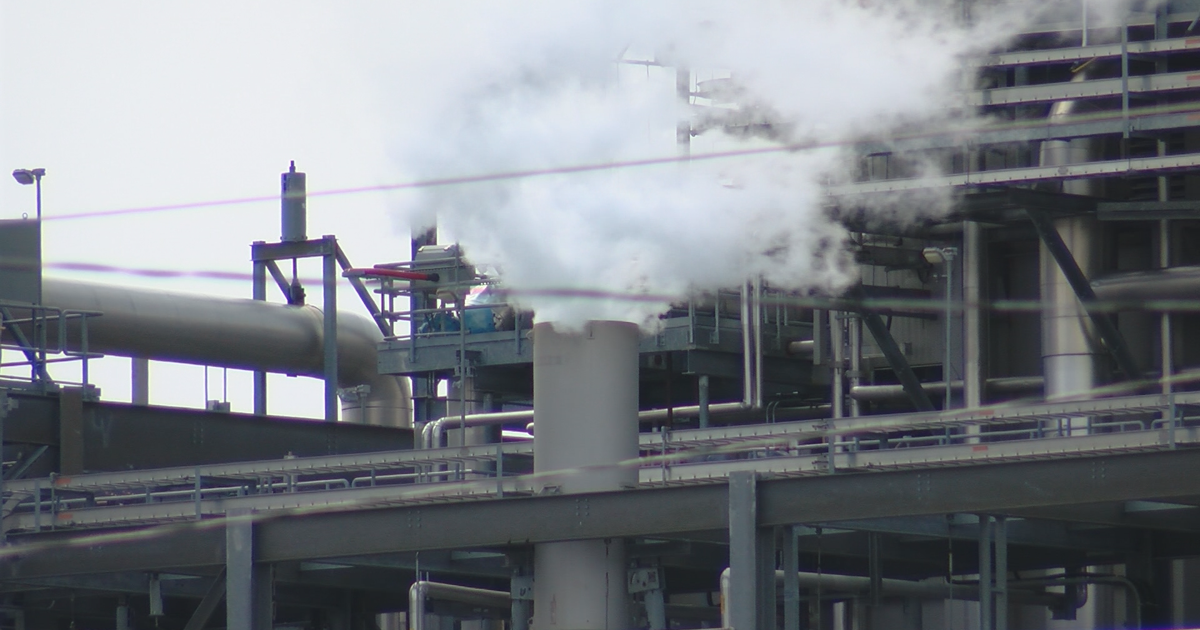
On March 21, 2024, IQ Air released its 2023 World Air Quality Report, and guess who took the spotlight? None other than our own Beloit, Wisconsin, which was crowned as the regional city with the worst measured air quality in the country. Since then, Pablo Toral, professor of Environmental Studies and International Relations, suddenly found himself in the media and political spotlight, fielding interviews left, right, and center, from public radio in Madison and Milwaukee to big shots like The Chicago Tribune and ABC News. And that’s not all: he has been fielding requests for interviews from Environmental Initiative in Minnesota, different chapters of the League of Women Voters, and Healthy Climate Wisconsin, all looking for a piece of wisdom. It has been a busy month.
The story begins over a decade ago, as Toral began an effort to get the city to come up with a climate plan to decarbonize Beloit, giving presentations and other general pestering. The aim was to have the city develop a climate plan—not a “climate proclamation”—that considers Beloit’s sources of greenhouse gases and a specific scheme to make the city carbon neutral. Dr. Brittany Keyes, who served on the city council from 2020 to 2022, shared Toral’s concerns specifically on the impact on public health, and in 2020, asked Toral for help in understanding Beloit’s emissions.
There was a gap in the data. While producers of emissions (e.g., factories) reported their pollutants above a certain threshold as they were legally required to, something was missing. Turns out, Beloit was a melting pot of pollutants—from factories, power plants, and good ol’ cars—but nobody was keeping tabs on the real levels. So Toral reached out to the EPA, who lent Toral a few low-quality sensors for a year. During that year, five different Beloit community organizations, including Nature at the Confluence and Beloit Memorial High School, bought their own sensors and began harvesting their own data.
Then, IQ Air was putting together their World Air Quality Report and found that Beloit had some of the highest quality data on pollutants in the country, “incredibly and unusually reliable for the city’s size,” Toral said. Thus, Beloit earned the dubious honor of “worst air quality” in the regional city category.
But hold up—before you start booking your escape to cleaner pastures, consider this: Beloit’s data game was on point, unlike larger cities like Milwaukee or Chicago, where reporting fell far short of Beloit’s rigor. We cannot know the truth about pollution in Beloit, because other cities do not measure their air quality as we do, largely thanks to Toral’s efforts. “All of this happened by chance, there was no clear plan. It was me knocking on the doors of the city,” Toral said. “There was no person in the driver’s seat and no clear sense of direction.” It was true serendipity.
The city of Beloit responded to this report by blaming the wildfires from this summer. Toral says this could be a large part of the issue, as last summer the wildfires in the Northwest territories’ particulate matter AND that of Quebec’s wildfires were blown straight into Beloit due to wind changes and changes in weather patterns. (As a side note, Toral’s project had incredible data on the impact of these two fires, hundreds of miles away from their origin.) However, the wildfires are not the full story, says Bill Droessler, an environmental attorney at Environmental Initiative, which specializes in bringing together companies, government, and the community to find environmental solutions. The wildfires explain many of the ambient air problems (state-wide issues), but Toral’s data signals a local problem apart from the wildfires, according to Droessler.
“The things Pablo is doing are cutting edge… these issues will be faced all over the country in the coming years,” Droessler, who visited Beloit last Thursday and Friday to talk with Toral about how he conducted this project, said. Former Beloit student with a cabin in the Boundary Waters, Droessler said that cities around the country need to have projects like this, but the city must be prepared for action once the data is collected. The city needs to be ready for bad news, and have a plan to confront it. Does Beloit?
Toral is looking forward, too, as UW Madison is banging on his door asking for help replicating the project and Environmental Initiative is looking for help. An interesting bit of nuance, though, is the fact that the data signals emissions leakage. Essentially, counties with lower emissions are importing their energy from counties like Beloit, moving the pollutants produced in their used energy out of their county and into lower-income communities. But “the climate does not care if emissions are decreasing in one place and increasing in another place,” Toral said.
At the end of the day, citizen science is huge because it fills a vacuum. Tau Kappa Epsilon has been big in this area, putting a sensor straight on their front porch. The new library should hold a sensor or two once it is finished with construction. Grassroots efforts are leading the charge. But how many small towns can’t do something like this because they don’t have a college where students and faculty are on the cutting edge? “We have many unknowns,” Toral said, “but we know more than we did before, and we know what many communities do not.”
Featured Image Credit: WKOW

Leave a Reply