

Flora Milford, Op-Ed Editor

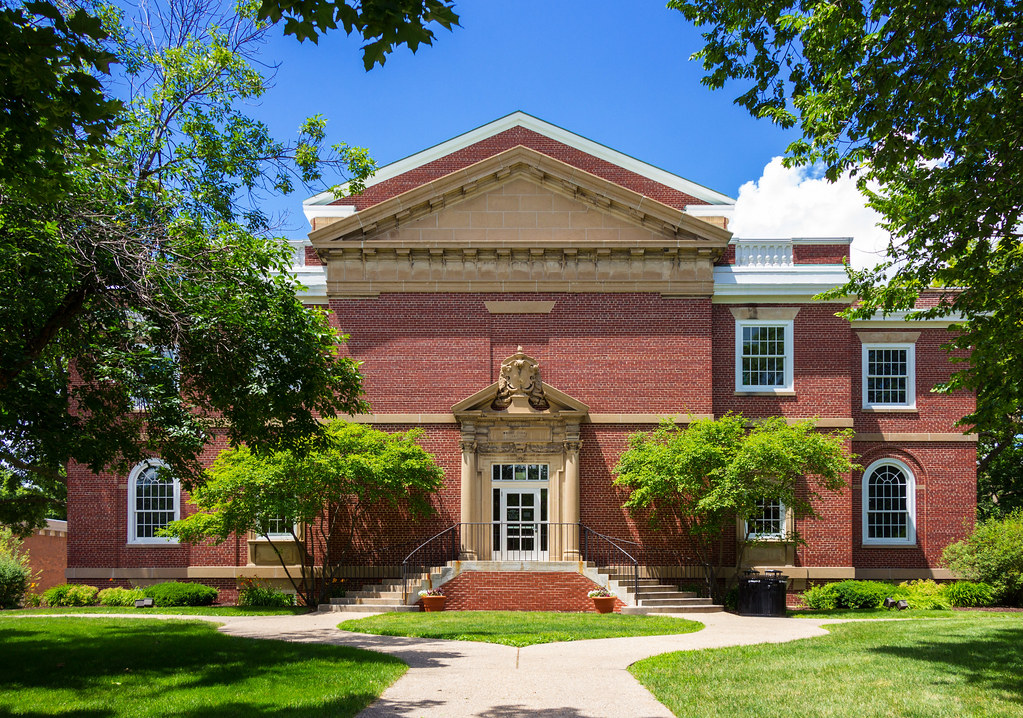
The senior art show, “Polyperspectivity” went up at 4:00 p.m. on April 12th, in the Wright Museum of Art. Five studio art seniors, Aliza Ayala’24, Kristin Larson’24, Franccesca Mamani’24, Chase Nelson’24, and Jaida Wesley’24, came together for a dazzling show, highlighting their powerful and unique art.
About thirty minutes into the show, Scott Espeseth, Professor of Art at Beloit College, gathered the gallery’s inhabitants together to say a few words that highlighted just how impressive this show was (if it wasn’t already obvious). He stated, “The students had no class time to work on this show, they did it all in their own time, planning and installing everything.” Christa Story, Beloit’s Academic Curator, helped to curate the show, but aside from her help, the students did it all.
Espeseth also announced the winner of the Ella Malsh Memorial Prize in Art, given to one senior whose work was the best example of “art seeks to extend, discover, formulate, manipulate, and bring together.” The winner of this award was Chase Nelson.
In his artist statement, Chase Nelson wrote, “I wanted to focus on Mental health. I have experienced a substantial amount of aggregative trauma and generally negative mental health conditions for a good portion of my life. Through these trials, I’ve made it my goal to improve the lives of others and myself.” In further conversation, he explained how each of his pieces, all re-amalgamations, were self-portraits–though that may not always be noticeable at first glance. He additionally stated that he hopes his art will “move to lighter things in the future, though I’m proud of what I’ve created–which I needed to create–now.”
The work of the other artists was equally impressive, though very different from Nelson’s. Aliza Ayala explained how her work–mostly in painting with the occasional addition of mixed mediums (though she also had a Barbie box constructed completely by hand!)–centers around community and identity, specifically as a third-generation Mexican-American. She stated how “my work meets me where I am with my identity. It reflects my inner turmoil, often through childhood aspects. I hope my work speaks to my community, and calls people in, rather than out.”
Sharing a gallery with Ayala were Kristin Larson and Franccesca Mamani. Larson’s work was an amalgamation of painted pieces, sculpture, and photographs. In her artist statement, she wrote “I believe Art keeps the pulse on society and is an expressive and healing tool independently and interdependently. It is my hope that the art I create helps others learn about the world and different experiences in it… My work is dedicated to my grandmother, Earleen Bell, as I created it and used it to process, grieve, and heal during the journey of her diagnosis and eventual passing from cancer during its creation.” She also explained how her sculptures were a way to capture “generations of violets, violets which have been passed down.”
Mamani’s work–a combination of painting and poetry–highlights the sacred practice of life. In her artist statement, she wrote “I grew up admiring my family for their artistic abilities like painting, singing, playing instruments, and dancing. However, I always found myself straying away from their practices and connected intimately with art through poetry and drawing… Through each piece, I tend to sketch out images that symbolize parts of my writing.”
The final artist, Jaida Wesley, worked with different mediums than the others. Her work centers around her deep love for fantasy. One of the most technically impressive pieces of the whole show was a ten-foot (potentially fourteen–my notes are scattered) sculpture of her character, Cato. This piece quite literally looms over the rest of the show. In her artist statement, Wesley described “For my exhibition, I wanted to put my imagination to the test and create illustrations that tell the story of my character, Cato. Cato is an omnipotent being who constantly gathers information to understand how he came into existence. Cato was a soul in an abyss found by beings that can be considered ‘creation itself.’”
Polyperspectivity will be on display through the end of the semester and I highly recommend everyone make their way to the Wright Museum to check it out.

Leave a Reply