

By LIO KAMMUELLER
Spoiler-free review: “Cobra Kai,” a Netflix series continuing the storyline of the “Karate Kid” movies, is gearing up for its grand finale after nearly seven years. The release of its sixth and final season has been split up into three five-episode parts. Part two started streaming on November 15, and I personally have… mixed opinions on the new episodes, especially since they were advertised by the cast as some of the most exciting episodes of the series, which I believe they failed to deliver on.
The earlier seasons of “Cobra Kai,” and even the first five episodes of season six, won me over for their humor, interesting and relatable characters, and (at the risk of sounding like an English teacher) themes such as mercy, forgiveness, and growth. While glimpses of the show’s strengths are present in the new episodes and are wonderful to see, they are fighting for their life in a script of unnecessary filler content and reruns of conflicts that have already happened and been resolved, sometimes more than once. Still, the ending of the tenth episode is so unexpected that I think it will be worth watching to see what Ralph Macchio will do in the third act.
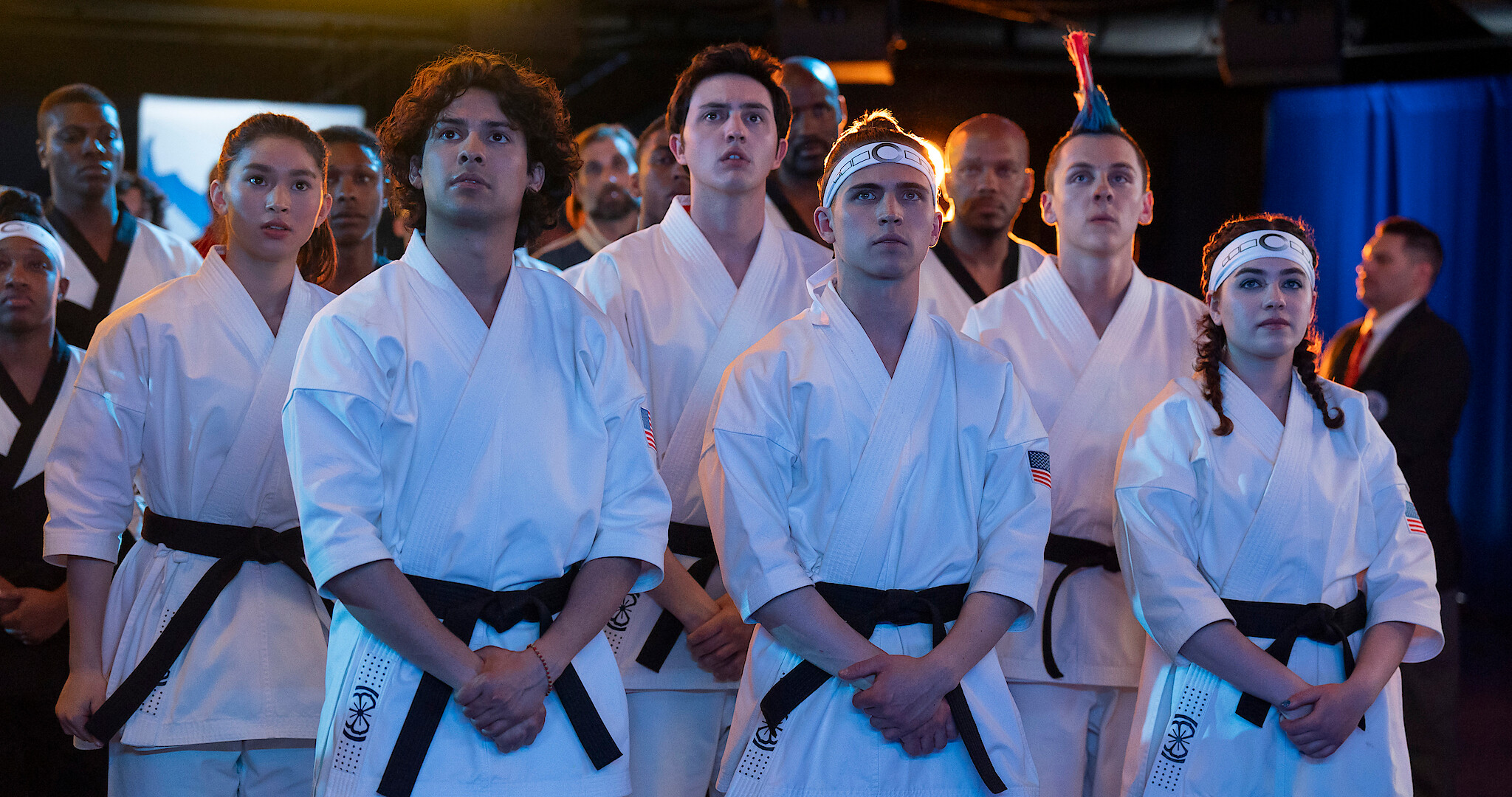
Spoiler-filled review: “Cobra Kai” spent almost a season’s worth of episodes hyping up its final tournament, the Sekai Taikai, an international competition of the best karate dojos in the world. The show promised that this tournament would be unlike anything it had done before, and it certainly delivered on that count. Every tournament we have seen so far has been a knockout bracket of one-on-one fights, but the Sekai Taikai abandons this format, focusing much more often on group fights.
While it is fun to see something different and creative, the fights in this tournament seem to be used more for spectacle than storytelling, as they have in the past. What’s more, is that these episodes are not even centered on the tournament itself. The Sekai Taikai was set up to be the central plot of the season, but it does not actually start until half an hour into episode six, and exactly zero tournament fights take place in episode eight.
Instead of giving us the sports anime-esque tournament that we (and Jacob Bertrand) deserve, part two spends way too much time on filler arcs that go nowhere. I don’t think that delving into Mr. Miyagi’s past and connections to the Sekai Taikai add anything to the show – it contributes to existing conflicts, sure, but it takes up too much of the runtime for being only a contribution. Not to mention that sending Miguel and Johnny home because Carmen is in the hospital only to immediately turn around and return when it turns out she is totally fine is pointless! Yes, the show has always spent time on characters and plotlines off the mat, but that used to actually go somewhere in a way that these arcs don’t. Disappointing.
Another weakness of part two is that it is far too reliant on repeating storylines and thematic points that were already made in earlier seasons. With the Sekai Taikai being a new challenge, I was expecting some new message or character arc from these episodes. But I did not get one. Daniel and Johnny have the same back-and-forth about karate ideologies and senseis that they’ve been having since season one. Demetri and Eli are at odds again at the beginning of episode six, but their conflict has no depth beyond bickering and middle fingers and is resolved much too quickly, considering everything they’ve been through in the series.
The biggest letdown was simply the screeching halt that part two gave the momentum set up by part one. Yoon’s character, which had so much potential when introduced, fades into the background as an extra. Miguel and Robby continue their power struggle over who deserves to be team captain, and while the moments of this dynamic are well-written and well-executed, they aren’t given enough airtime to be more than just moments. It all comes from the same issue we started to see in season five: the scale of the show has gotten too big. They’re trying to do too many things at once and, therefore, are unable to really hit home on any of them.
Regardless, the new episodes still had some very bright highlights. The foreshadowing and reveal of Terry Silver’s return is filled with visual callbacks to “The Karate Kid, Part 3” that reinforce the tension his presence brings. Actor Thomas Ian Griffith portrays him marvelously, as always, and my skin still crawls every time I see that haircut or the smiles he gives Kreese and Daniel – it’s an incredible performance. Many classic cliches are reused, like the importance of teamwork and believing in yourself. Still, I can look past their recycled and cliche nature because it’s honestly very cathartic to see core messages hammered home in the last season of a long-running show. The developing frenemies relationship between Chozen and Da-eun feels natural, and their push-and-pull dynamic is excellent fun to watch. The fan favorite of season six, Kwon, is popular for good reason, too. Not only is he well-written and well-played, but his actor, national taekwondo champion Brandon H. Lee, brings a new level of skill and excitement to tournament fights.
Finally, the end of episode ten is a twist we haven’t seen since Miguel fell off the balcony at the end of season two. I like that with the ending, they take us to new territory – someone has actually died. I genuinely have no idea where they are going to go after this, which is a double-edged eunjangdo I suppose. They have a lot to respond to and tie up, ideally without repeating the same points again, as they tend to do. If they manage to do this, it could be very effective; I just have no clue how they would actually accomplish that. I guess we have to wait until February.
Featured Image Credit: Netflix

Leave a Reply