

By BRIGID PARKER
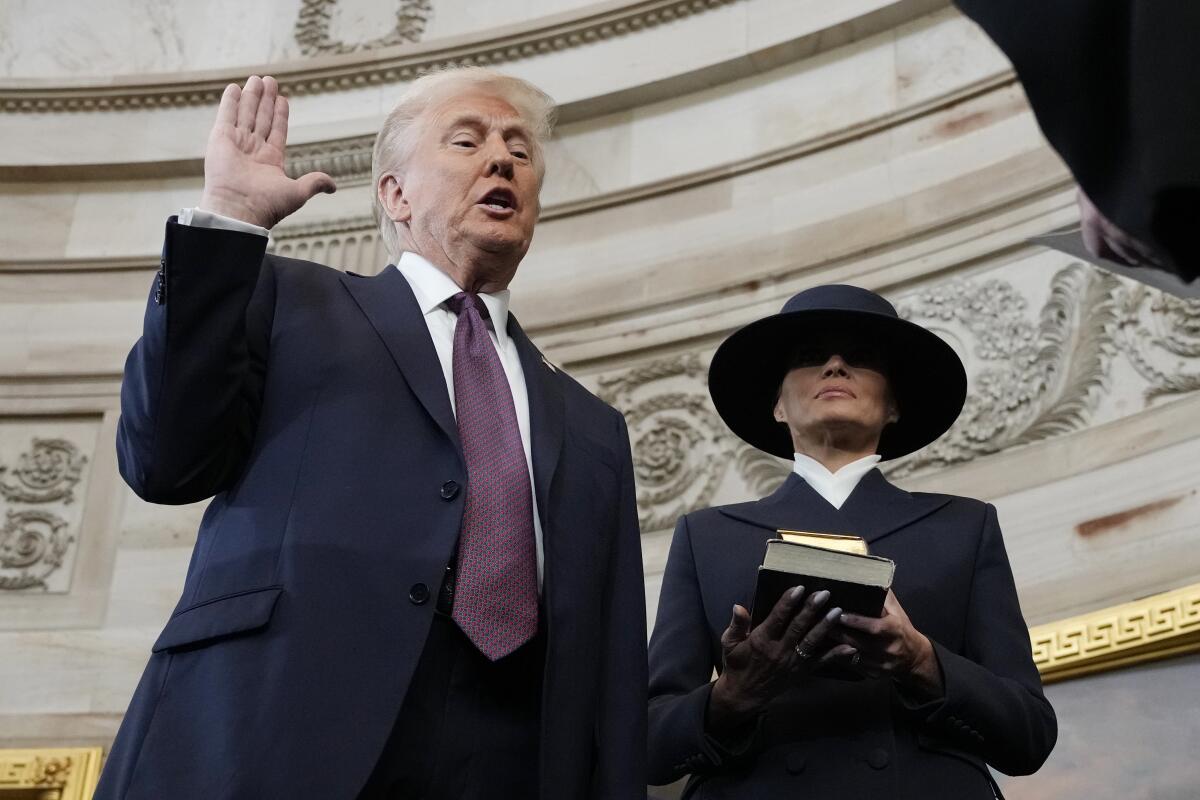
After being sworn into the Oval Office for the second time on Monday, January 20, Donald Trump immediately set about fulfilling his long to-do list of dramatic orders, as promised to his followers. In his record-breaking first day, Trump issued 1500 pardons, freeing nearly all of the previously imprisoned January 6 insurrectionists, made 26 executive orders and 12 memorandums. Losing no momentum, Trump continued to sign a flurry of executive orders over the remainder of the week, affecting everything from healthcare to immigration, to the environment, all in the name of “Putting America First.”
Since the inauguration, inboxes across the country have crowded with a seemingly never-ending stream of news updates, all eliciting the question, “what has he done now?” For those of us lucky enough to not have felt the immediate impacts of Trump’s extensive executive orders, the past week has been disorienting and left many unsure of what these changes will actually mean for American life. Below, you will find a guide to the major areas in which Trump has focused his energy during his first week in office. For brevity’s sake, this will not be an exhaustive list–for more information, I recommend visiting whitehouse.gov, where you can find the full list of Trump’s signed orders thus far.
Pardons
Within his first few hours in office, Trump issued a proclamation pardoning nearly all of the rioters who were criminally charged for their participation in the events of January 6, 2021, clearing away convictions ranging from small misdemeanors to serious assault charges. He also dismissed any pending indictments for the rioters. In a related move, Trump commuted the sentences for 14 members of far-right groups, such as the Proud Boys, who had previously been facing up to 18 years on sedition charges.
With these pardons comes the unfortunate confirmation of the fact that Trump still sees no misdeed in the invasion of the Capitol, and is instead attempting to rewrite the attack as an exercise of free speech.
Environment and Climate Change
A great deal of Trump’s early orders have included the negation of many achievements from Joe Biden’s presidency. Fighting climate change was a key ambition of Biden’s administration, and Trump is working quickly to unravel those efforts.
Most notably, Trump ordered once again that the United States withdraw from the Paris Climate Agreement, which aims to lower greenhouse gas emissions globally. This means that the United States is no longer under any obligation to meet the emissions reduction goals put forth by the Paris Agreement in an effort to slow the effects of climate change. As a push in the opposite direction, Trump also declared a “national energy emergency” and signed an order pressing for the expansion of energy infrastructure and increased use of oil and gas resources, the burning of which emits greenhouse gases and contributes to global warming. In Trump’s own words, the plan is to “drill, baby, drill.” He has also put a temporary stop to numerous wind energy projects in order to prioritize the oil and gas industry over “big, ugly windmills,” and rolled back protections on the Alaskan wilderness, promoting it as a major extraction site.
Through these orders, Trump has essentially signaled to the rest of the world that the United States has backed out of the fight against climate change at a dire time, leaving it to be figured out by the rest of the world. There is, however, still the possibility that environmental protection groups can file lawsuits against Trump and these orders, which may effectively slow them before they go into effect.
Rollback on Protections for Transgender Individuals
Under the guise of protecting women and “restoring biological truth,” Trump signed an executive order, effective immediately, mandating that the United States recognize only two sexes: male and female, and that, within the federal government, an individual’s gender identity must align with their sex at birth. The order also requires that federal agencies may not have any statements, policies, or any other type of messaging that promotes gender ideology–the set of ideas that defines sex and gender as separate entities. Federal funds will no longer be used to promote gender ideology. Later in the week, Trump ordered that transgender individuals be barred from enlisting in the military, and that individuals already serving in the military may not begin a gender transition.
Crackdown on Immigration
Ridding the US of illegal immigrants and guarding the U.S./Mexico border has always been a hallmark of Trump’s political campaigns, and he has wasted no time setting about that mission during his second term. In his first week in office, Trump signed a whopping ten executive orders addressing immigration, more than any other area within his powers. These executive orders include the ending of Birthright Citizenship, which allows the children of non-citizens born in the U.S. to receive automatic citizenship, the militarization of the U.S./Mexico border, and the immediate removal of any individual in the U.S. without legal status. Trump also has plans to crack down even harder on illegal immigrants with criminal charges, and has reversed Biden’s moratorium on the death penalty with the purpose of targeting non-citizens charged with capital crimes.
The impact of these orders has been felt immediately across the U.S. ICE statistics show that thousands of people have been detained in large cities like San Diego and El Paso, and thousands more have already been deported. Entire communities have been set on edge as rumors of ICE raids spread, and many schools and job sites have displayed dismal attendance in the days since Trump’s inauguration.
Amidst the panic and dread that has accompanied this burst of anti-immigration orders, community care has still found a way to shine through. Social media and news outlets have begun highlighting the ways in which citizens can help protect their undocumented neighbors through volunteer work and donations, as well as how to respond to potential immigrant raids, warnings of which appear to be coming about more and more frequently as Trump’s second term endures. Many border cities in Mexico have also created shelters in anticipation of the influx of migrants who may be crossing the border amidst the occurring crackdown.
Elimination of DEI
First gaining traction in the 1980s, as the Reagan administration threatened to reverse the United State’s progress towards civil rights, DEI (Diversity, Equity and Inclusion) promotes fair treatment in the workplace and aims to diminish the structural impact of centuries of unequal treatment based on race, gender, disability status and more. For most, DEI is a mark of a workplace that values all backgrounds and perspectives. For Trump, it means unfair treatment towards those who are historically privileged in most workplaces and creating diversity for the sake of appearances. The Trump administration believes that hiring should be based on merit, not “wokeness,” and has ordered that all DEI programming within the federal government be abolished. Those working in these programs have been put on paid leave or laid off. Many government employees have also reported that they have been encouraged to come forward if they believe a colleague is working on anything having to do with DEI, so that that individual may face discipline.
Though Trump’s executive order only directly addresses the federal government, many corporations have already followed suit and scaled back their DEI policies, including McDonald’s, Target, Amazon and more.
The attempted elimination of DEI programming marks a massive step back, both for the federal government and the companies choosing to show their true colors and curtail their efforts towards equality. In an attempt to root out discriminatory practices towards the privileged, these orders will open the door to intolerable treatment towards the historically disenfranchised, whom DEI is designed to protect and uplift.
What does this mean for Beloit?
Trump’s momentum has shown no signs of letting up since his inauguration. It is difficult to create a plan of action to handle these changes when so much is still coming at us every day. Because of the rapidity of Trump’s executive orders, Beloit’s administration is still navigating what they will mean for campus policy and student life. While it’s easy to let our minds wander to the dark corners of what could be, what’s important now is to focus on what we know and practice caring for ourselves and our communities in any way we can; engage in active listening with other community members, get involved with a local organization, find community events to attend. For more information on the impact of Trump’s orders, I recommend attending the panel discussion taking place in Richardson Auditorium, February 7, 12:30 to 1:20.
Featured Image: LA Times

Leave a Reply