

Multiple national and international events of this past month have dramatically shifted the political landscape in the United States. In Minneapolis, two separate incidents occurred in which federal agents present in the state on an immigrant enforcement operation killed U.S. citizens. Renee Good was shot in her SUV during a verbal confrontation with an agent. Just over two weeks later, Alex Pretti was pinned down and shot while recording a video of federal officers on his phone. Videos of both incidents were posted on social media. Gov. Tim Walz and other Minnesota officials have spoken against the presence of federal agents in the Twin Cities, while officials and spokespeople from DHS have referred to both Good and Pretti as “dangerous” and “domestic terrorists”. Thousands of residents of the Twin Cities have rallied in protest since these incidents occurred, including a massive demonstration in downtown Minneapolis on Jan. 23. Trump has claimed both that he intends to “de-escalate a little bit” and that he would “not at all” pull back on his deployment of ICE in Minnesota.
Beyond the national borders, in the middle of the night on Jan. 3, the U.S. military carried out strikes in the Venezuelan capital of Caracas in order to arrest President Nicolás Maduro and his wife, Cilia Flores, on charges of narco-terrorism, drug trafficking, and possession of machine guns. With Maduro sent to New York to await trial, President Donald Trump claimed the U.S. would “run” Venezuela and negotiate deals to turn over control of the country’s abundant oil resources. The intervention is controversial due to Trump’s lack of congressional approval, raising concern around the intervention’s legality. Delcy Rodríguez, Maduro’s vice president and current acting president of Venezuela, has called for the U.S. to “let Venezuelan politics resolve our differences and our internal conflict,” but the Trump Administration is working with companies Vitol and Trafigura to sell and market Venezuelan oil. Trump has stated that the U.S. control of Venezuela could last for years.
The president’s attention has also turned north to Greenland, an island territory of Denmark off the coast of Nunavut, Canada. Trump has expressed interest in annexing Greenland as a territory of the U.S. Like Venezuela, Greenland possesses natural resources such as uranium and iron, and reserves of oil and natural gas are likely located around the island’s coasts. Greenland’s Arctic location also makes it strategically important for U.S. national security by monitoring trade and missile defense. However, the majority of Greenlanders are opposed to joining the U.S. and prime ministers of both Greenland and Denmark reject a proposed U.S. takeover.
In a message to Norwegian Prime Minister Jonas Gahr Støre regarding international relations with Greenland, Trump stated, “I no longer feel an obligation to think purely of Peace, although it will always be predominant, but can now think about what is good and proper for the United States of America.” This sentiment raises concerns about future international conflict as a whole, particularly with regard to NATO which Denmark and the U.S. are members of. While Trump initially refused to comment on whether he would authorize the use of force to annex Greenland, he has since ruled out the prospect of military force after discussion with Mark Rutte, secretary-general of NATO.
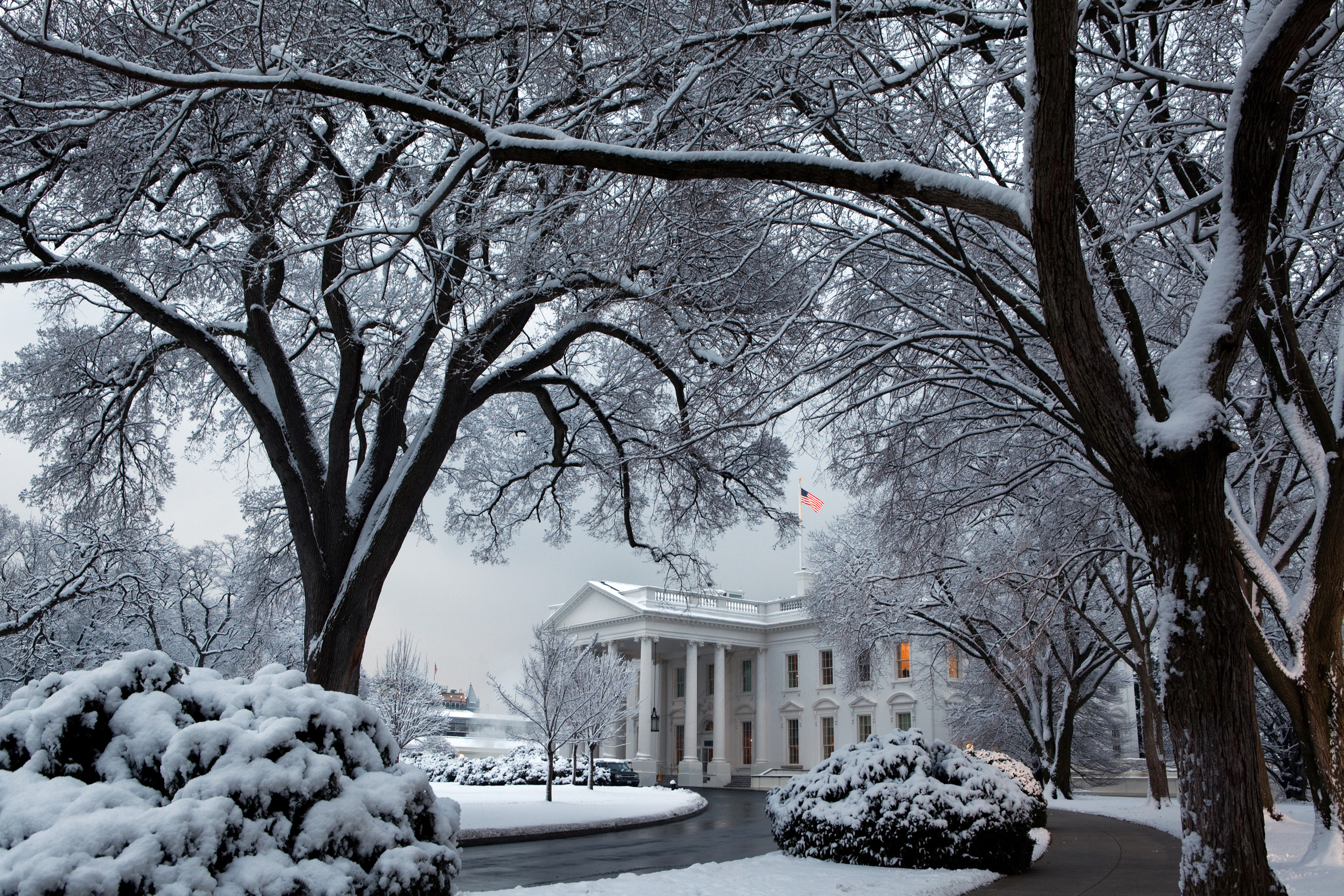
Featured Image: Pete Souza via Wikimedia Commons

Leave a Reply