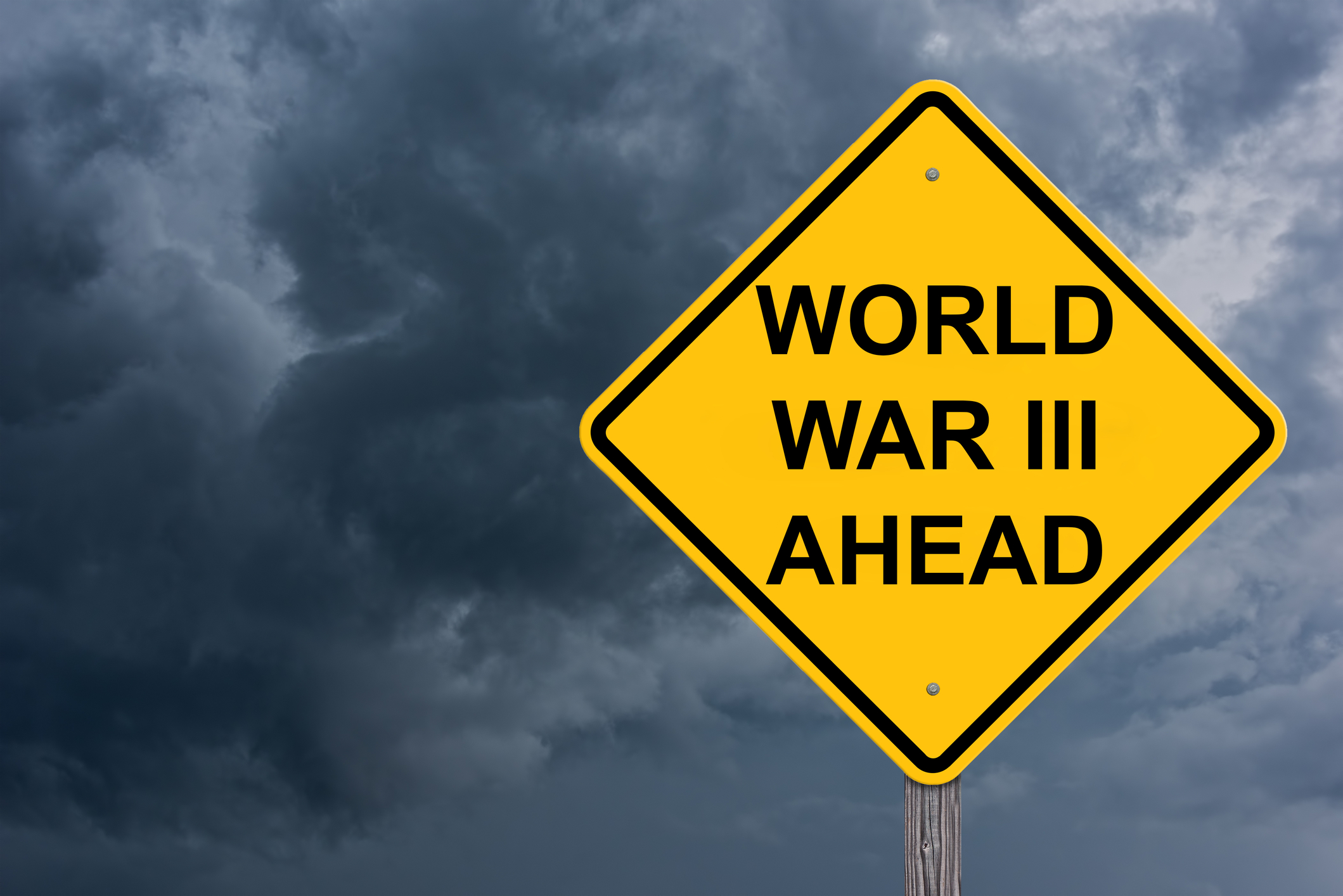
The world feels closer to the brink of a global war than at any point in our generation’s living memory. After a series of lightning strike crises in the Middle East, Eastern Europe, Asia, and Africa, influential analysts, security experts, and former officials are openly asking whether the current series of conflicts is drifting towards World War 3. The pattern is eerily familiar: an already‑fragile international order, multiple regional wars, and major powers crossing red lines that violate most, if not all, international laws.
What you’re seeing now is not one war but a cluster of overlapping conflicts, each with its own history, actors, and stakes. This article provides you with a detailed breakdown of the major war and flash point zones focusing on what is happening as of late Feb. 2026.
Afghanistan – Pakistan War (Feb. 27- Ongoing )
On Feb. 27, 2026, Pakistan declared a formal war on Afghanistan, marking the first time in decades that the two neighbors have openly acknowledged being in a state of open armed conflict. The decision followed a dramatic escalation that began on Feb. 26, when Taliban‑led Afghan forces launched cross‑border operations targeting Pakistani border posts along the Durand Line, claiming to have killed and captured 19 Pakistani posts. Hours later, in the early hours of Feb. 27, Pakistan’s Air Force launched a wave of strikes under the codename Operation Ghazab Lil Haq (“Righteous Fury”), hitting Taliban military headquarters, weapons depots, and border installations in Kabul, Kandahar, and Paktia, with multiple large explosions reported in the Afghan capital and secondary blasts indicating ammunition storage detonations. Khawaja Asif, Pakistan’s defence minister, publicly stated that “Pakistan’s patience has reached its limit” and explicitly declared that “now it is open war between Pakistan and Afghanistan,” a phrase echoed by senior officials including Acting Foreign Minister Ishaq Dar and military spokespersons.
This formal declaration came against a background of intensifying violence that had already killed dozens inside Pakistan. On Feb. 11, Asif warned that Pakistan might act inside Afghanistan if the Taliban did not halt attacks; on February 14, a suicide bombing at a Shiite mosque in Islamabad killed at least 36 people, and on Feb. 21, Pakistan conducted airstrikes in Nangarhar, Paktika, and Khost, claiming to destroy seven militant camps linked to the Tehreek‑e‑Taliban Pakistan (TTP) and ISIS‑K, which Islamabad says operate from sanctuaries in eastern Afghanistan. In Kabul, Taliban spokesperson Zabihullah Mujahid confirmed that Pakistani jets struck multiple sites, while Afghans near the border reported heavy artillery exchanges and the displacement of civilians from villages along the frontier. As of Feb. 27, Mosharraf Zaidi, the Pakistani prime minister’s spokesperson claimed that 297 Taliban fighters have been killed and more than 450 are wounded in the strikes. An Afghan spokesperson says 55 Pakistani soldiers have been killed. A conflict that began as cross‑border tensions has now turned into a declared, high‑risk war between a nuclear‑armed Pakistan and the Taliban‑controlled Afghan state.
Russia – Ukraine War (2022 – Ongoing)
As of March 1, 2026, Russia and Ukraine remained locked in the fifth year of Europe’s largest war since 1945, with fighting focused along a grinding front in Donetsk, Luhansk, Zaporizhzhia, and Kherson. Since Russia’s full‑scale invasion began on Feb. 24, 2022, Moscow has seized parts of eastern and southern Ukraine, while Ukraine, backed by over $100 billion in Western aid, has fought to reclaim territory and defend key cities. In recent days, Russia launched a massive missile and drone barrage, firing roughly 420 drones and 39 missiles at Ukrainian infrastructure, with many intercepted but still causing blackouts and damage in cities including Kyiv, Lviv, and Khmelnytskyi. Ukraine has responded with drone and missile strikes inside Russia, hitting manpower concentrations near the border and air‑defense systems such as a Pantsir‑S1 in Dubovoe.
Diplomatically, U.S. President Donald Trump and Ukrainian President Volodymyr Zelenskyy say they agree on about 90 percent of a potential peace framework, while Russian President Vladimir Putin still demands territorial gains and security guarantees. Moscow leans heavily on China as a key economic backer, while Ukraine pressures Western allies for more advanced air defenses and long‑range weapons. With both sides preparing for a possible spring–summer 2026 offensive and no clear path to a negotiated end, the war remains a high‑risk, attritional grind that could still widen into a broader European confrontation.
Armed Conflicts in Africa
Right now, across Africa, several major wars are running at the same time, creating one of the worst humanitarian crises on the planet. In Sudan, the war between the army and the Rapid Support Forces has been raging since April 2023, killing tens of thousands and forcing more than 10 million people to flee their homes by early 2026. The capital, Khartoum, has been shattered by bombardment, and the western region of Darfur has seen repeated massacres and mass displacement. Across the Sahel region, particularly Mali, Niger, and Burkina Faso, militant groups have pushed into new areas since 2015, closing schools and driving out aid workers. In 2025 alone, more than 1.5 million people were displaced, and large rural zones now live under the shadow of armed groups.
In Somalia, the war against al‑Shabaab has intensified since 2022, with major offensives and counter‑operations that have killed more than 15,000 people since 2020 and displaced around 4 million men, women, and children. In the Democratic Republic of the Congo, eastern provinces have been in near constant war for over 25 years, but the current phase, driven by the M23 group allegedly backed by Rwanda, has displaced more than 6 million people by 2026. In the Horn of Africa, Ethiopia’s fragile peace deal after the Tigray war has been nullified, with new clashes in 2025 – 2026 killing thousands and adding to more than 5 million displaced inside the country. Altogether, by early 2026, over 30 million Africans are displaced by war, and many more face hunger, no medical care, and the daily fear of violence.
Tension in Asia
Across Asia today, the region is not in one big war, but it feels like a chain of fragile borders, old rivalries, and constant pressure. In the South China Sea, China and Vietnam stop short of an open war but still clash at sea, with Chinese ships pushing Vietnamese boats away from reefs and disputed energy sites, while Vietnam quietly strengthens its own military outposts. In the Himalayas, India and China keep moving more soldiers, guns, and helicopters into the high mountains, with small clashes between patrols sometimes turning into bloody standoffs that pull the two global powers closer to the edge.
India also lives under the shadow of war with Pakistan, another nuclear‑armed neighbor, as the two sides trade border shootings, militant attacks, and retaliatory strikes along the Line of Control in Kashmir. On Mar.1 around 6:00 am IST, Pakistan opened fired drones across LOC into India, but were promptly shot down by Indian forces. At the same time, India’s tense but mostly quiet border with Bangladesh brings constant arguments over rivers, illegal immigration, and security. In the South Caucasus, Azerbaijan and Armenia are still experiencing the aftermath of the Nagorno‑Karabakh war, with Baku trying to secure its gains and Yerevan feeling exposed.
In Southeast Asia, Thailand and Cambodia’s old border wounds flared again in 2025, when a deadly clash on May 28, 2025, near ancient temples quickly escalated into full‑scale fighting by July 24, 2025, with Thai jets and artillery hitting Cambodian positions, rocket fire hitting civilians on both sides, and more than 300,000 people forced from their homes before a ceasefire finally took hold. Beyond these pairs, the most dangerous flashpoints are around Taiwan and the Korean Peninsula, where China’s military pressure on the island and North Korea’s repeated missile tests keep Tokyo, Seoul, and Washington on high alert. Altogether, Asia is living in a tense state of rivalry where the next crisis in either of these regions or borders could easily stop being a regional clash and start a chain of global catastrophe.
The Middle East
In the Middle East today, the region is not particularly at peace, but not also in one single war. Instead, violence and fear run through several countries at once, with civilians often caught in the middle of conflicts. In Syria, the civil war that began in 2011, and ended in 2024 when the Assad regime collapsed, ha snow transitioned into the Syrian Conflict, where the government, backed and opposed by proxies, still battle jihadists, and Kurdish led forces in parts of the north and east, where around 310,00+ were killed and more than 6.7 million people were internally displaced. In Yemen, the country has been split for years between the Houthi dominated north and the internationally recognized government in the south. The conflict is still witnessing a lot of external influences from major world powers. The conflict has destroyed hospitals, schools and water systems leaving the population in a dire humanitarian crisis. Around 85,000 children have died of starvation, 400,000 people died directly or indirectly by this conflict, and more than 4 million people have been displaced.
In Iraq, the Islamic State’s rule collapsed in 2017, but the country still lives with the aftermath of that violence. Armed groups linked to Iran clash with U.S.‑backed forces, while political tensions and tribal rivalries flare up in the north and west, with roadside bombs, assassinations, and local power struggles keeping many communities unsafe. Further north, in Lebanon, Hezbollah’s long‑running standoff with Israel occasionally erupts into cross‑border strikes and missile exchanges, especially along the border areas, which has displaced tens of thousands of Lebanese during flare‑ups and added to the country’s economic collapse.
In the Gaza Strip, the October 7 Hamas‑led uprising and Israeli offensive left entire neighborhoods in ruins, with local health authorities and the UN reporting that tens of thousands of Palestinians and hundreds of Israelis were killed or wounded, and more than 1.7 million people, around 75 percent of Gaza’s population, were displaced at the height of the conflict, many living in overcrowded shelters or exposed to repeated attacks.
Are we moving toward World War 3? The global landscape today no longer looks like a system held together by stable rules and trust, but more like a series of overlapping crises where the old order is quietly collapsing. Wars across the Middle East, Asia, Europe, and Africa are no longer treated as isolated conflicts, they are feeding into a larger erosion of diplomacy, international law, and the belief that force should be a last resort. Drone strikes, cross‑border bombardments, and leadership‑targeted operations have become routine, while the institutions that are meant to restrain violence are increasingly sidelined or ignored. If this pattern continues, the world may not erupt suddenly into a Third World War, but simply realize, too late, that it has already stepped into one.
Featured image: Defense.info


Leave a Reply to Morganna WilliamsCancel reply