

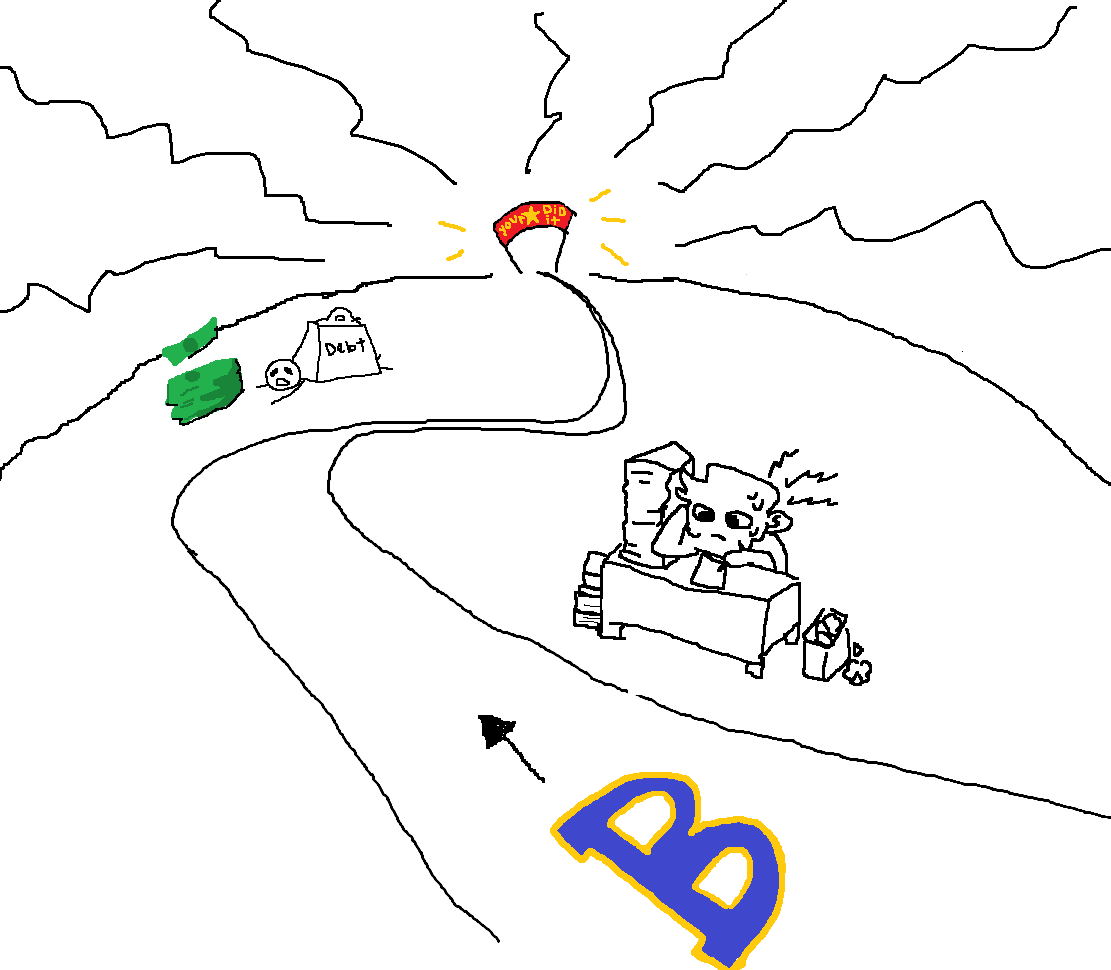
As we prepare to close out the 2025-2026 school year, Beloit College students spend a large portion of their time considering the steps they must take in order to reach the next phase of their academic journey.
In order to provide the most interesting and diverse range of answers, I reached out to a variety of student-recommended professors throughout several departments, both visiting and tenured, to whom to pose this question:
So, you’ve put in the work, become successful in your field, and are working to shape the next generation of academics. What’s the next step you plan to take in life? Does your life’s goal still lie in furthering your work, or is there something else that you see in your future?
“I’m planning to retire from teaching after next year, so I’ve been giving some thought to this question of “next steps.” Two aspects of my work here at Beloit–reading and writing–I’ll of course continue to do along with the breathing part. I probably won’t talk so much. Bike more, travel more, find a few new hobbies, seize the day. Find some ways to be helpful. Maybe get myself one of those rolling “pop-up” mobile bicycle repair rigs in some big city and save the world.” – Professor Chuck Lewis
“‘Success’, I’m still working on it, but I do feel like I’ve made some progress. I got the visiting assistant professor job here at beloit college, which has been a fantastic experience, and I also teach at UW Whitewater, that’s where I am full time. My goal is still to get a tenure track position at a university. Teaching is my passion, so I feel like in terms of being successful, driving student success reflects my success. Helping students like here on campus do research projects, and also do the symposiums, which was really fun working with students. I’m doing that as well at Whitewater. My success for me is both, one: being a good academic, like getting all the publications and conferences like I do, but it’s also being a good instructor and changing lives, having a valued impact on students that helps them be successful.” -Visiting assistant professor Tarryl Janik
“It’s kind of hard to say because I’m fairly new. I got my dissertation about two years ago and I’m kind of lucky to have graduated, in some ways, before chatgpt took over. I don’t know if you’ve noticed this in other classes, but it’s a very difficult thing to work against. I have been reading a lot of articles, talking to many colleagues, different universities, and teaching has become very difficult. Not only is one of the problems we have always had was finding a job in academia. It doesn’t matter, you know, even if you graduated from a top school, you have publications, and all of that teaching experience, it remained very difficult to find a job. For me, I’m lucky to have something in Beloit, and I’m lucky to have my spouse who also has a job that allows me to do something like this, to still be able to teach. It’s very hard to see into the future, I hope that I can stay in academia, but if I am very realistic, it’s something that I will take day by day. I’ve come to love teaching. To be honest with you, I didn’t enter academia thinking that I would love teaching, the one thing I always feared and never wanted to do was the teaching part, but once I started teaching, I’ve liked it a lot. In the US, students need to take humanities classes because, whether you’re going to be an electrician, in administration, or a politician, you need to know something about humanities, because it’s directly tied to the idea of American citizenship. I think it is that education that is being eroded by less and less funding, and is no longer connected to good citizenship but is connected to making money, and that’s not the way the education system was set up. Another reason this is being eroded is LLMs (Large language models), something like chatgpt, and students are thinking less and less for themselves, they are just letting something else answer it for them, and I’m not sure how to help them, especially those going into things like teaching. I’m going to continue teaching for as long as I can maintain it, doing more research, more writing. I’m hoping to publish some stuff, but I’m usually pretty hesitant to publish something unless it’s in good shape, which goes for all scholars. My other plan is, if it doesn’t work out, also look for other things, which I would also encourage students to do, look at other careers, especially with how quickly the job market is changing. Even if I have a PHD in history, and love this job, I can still look to other things if this doesn’t work out. The future is open. Some other fields are based on prediction, but historians wait for the whole thing to happen and then write about it. Also, I have two kids, so much of it is also about them, and so much of my day is spent helping them read and teaching them. I’m very involved in their lives, so it’s hard to speak of the future in the way that I would have five years ago. I see the future much too complex to think about, but in the short term, I’ll just continue teaching and writing.” -Visiting assistant professor Sabauon Nasseri
These three professors, each in very different stages of their professional careers, have a wisdom of experience that most of us students can not yet hope to achieve. If nothing else comes from this series of interviews, I hope that some of us may take their advice to heart, and use their experiences, among others, as a blueprint for our own careers.

Leave a Reply