

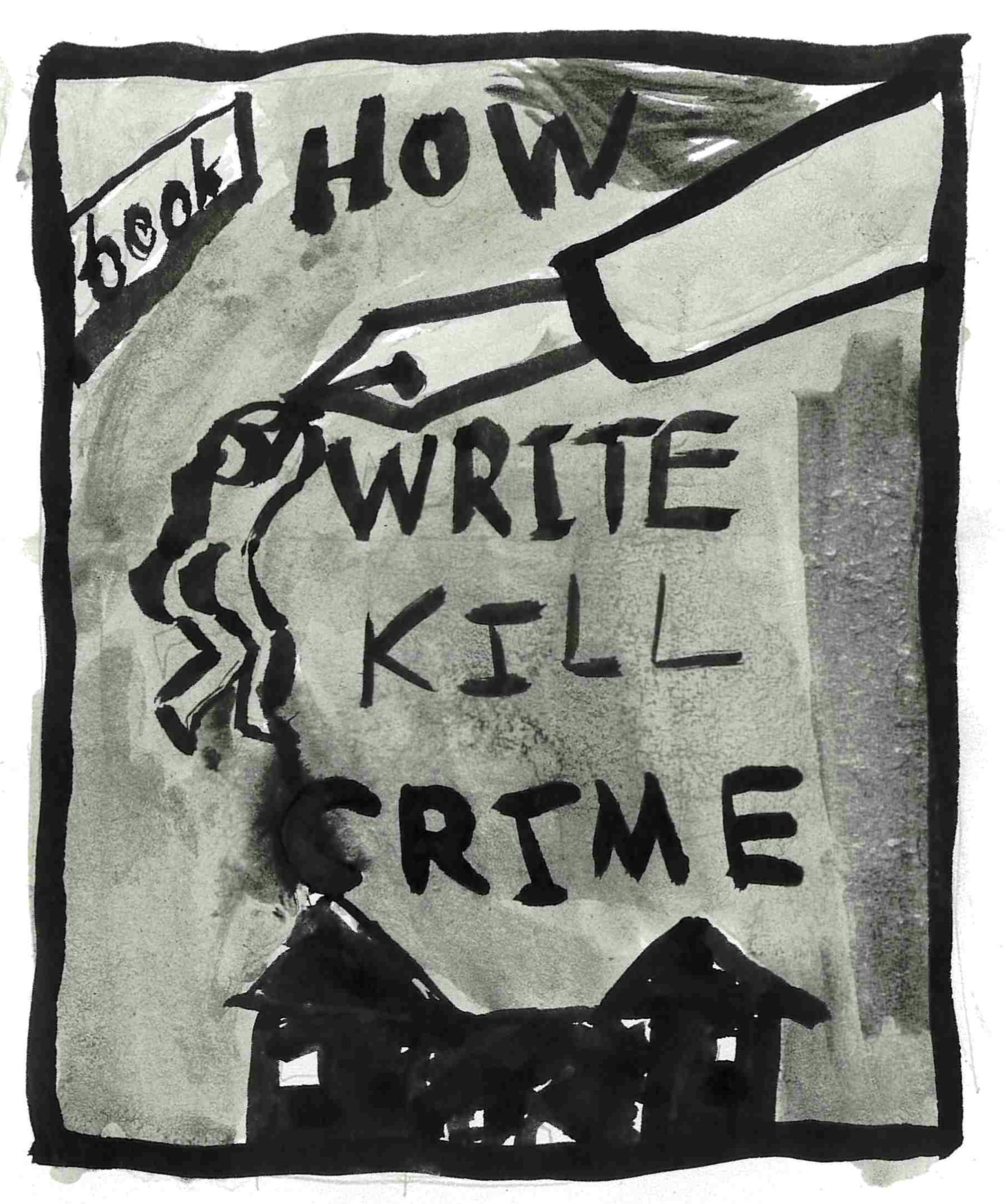
Jessica Brody is an author I have been aware of for some time, mainly from her book “Save the Cat! Writes a Novel,” which has been on my shelf. When I heard the title “How to Write a Murder,” I thought it would be another informative book guide; and in a way it was, along with a good old-fashioned murder mystery/thriller.
As a reader, I stay about as far away from thrillers and mysteries as possible. I am, for lack of a better word, a chicken, and do not remotely possess the skill set to be a detective. I’m a writer (shocking, I know), and when I saw that the cast of characters was all writers, I was sold.
The cast of characters was rather intriguing, with classic suspects including an amateur detective, an ex-lover, an assistant, an ex-business partner, and more. I genuinely thought each point of view in the novel added something valuable. Character-wise, my heart belongs to Evelyn, an 80-year-old woman with a cat named Dexter.
A fact I loved about the book was the extra point of view included, which was the “author” themself — and no, I don’t mean Brody, but the author of the mystery unfurling before the character’s eyes. The addition of such a POV is one of the reasons I love this book so much. Not only was the “author” witty and a total puppet master, but the hyper-awareness of all the characters about murder tropes and classic acts within a mystery led to a very meta and entertaining read.
It was simply hilarious and led to fantastic one-liners. One of my favorites was, “‘Why don’t we search the study, then the ballroom, then the conservatory!’ He snapped his fingers. ‘Oh, right. I keep forgetting it’s not a game of fucking Clue.’”
Speaking of “Clue,” the movie was a big inspiration for Brody to write this novel, and as a result, there were a bunch of subtle elements from the film that I adored: the guest list, everyone being a detective, the constant finger-pointing, and the chaos of splitting up into pairs. It created a sense of nostalgia in me (“Clue” has celebrity status among my family), and I think contributes to a big part of why I adore this book so much. It wasn’t an exact copy by any means, but it felt familiar in a way that made it easy to follow everything that was happening without thinking hard about it. A perfect companion to all the academic text the semester brings.
Alas, the additional POV is a bit of a double-edged sword. While I eagerly devoured it, it did get long and over-explanatory in some parts, which took me out of the story. This novel is hefty, coming in at 560 pages compared to an average of 280–360 for murder mystery stories. The pacing was relatively good; it did drag here and there, but nothing that made me ever want to stop reading. In fact, the length was something I didn’t notice until the end. I was simply eager to pick back up where I left off.
As far as my detective skills (or lack thereof) go, I was able to put some pieces of the puzzle together, even before the characters did. When I felt like I was two steps ahead and had the murderer figured out, I got humbled and had to go back to square one. I didn’t end up being correct about who was responsible for everything, but I wasn’t completely blindsided either.
Overall, I had a lot of fun with this book and can sense it becoming a book I return to now and again. “How to Write a Murder” officially releases later this month, on Sep. 22.
Featured image Betty

Leave a Reply