

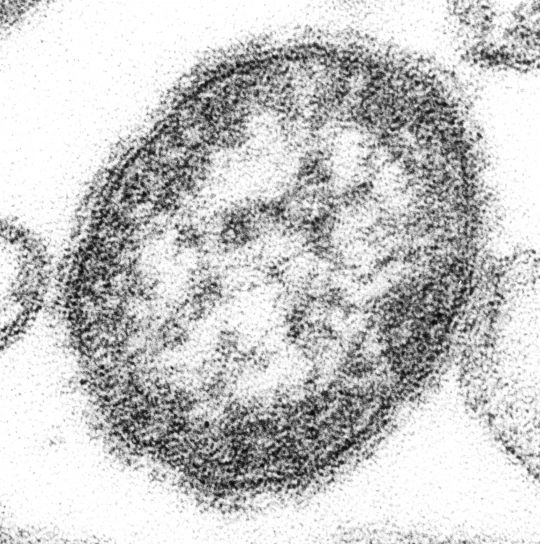
Wisconsin is in the midst of an unprecedented measles outbreak. Preliminary data from the CDC indicates 104 confirmed cases, all but two of which are from July and August. The number of individuals with a “rash onset” from the week of August 9th — 36 counts — matches the number of confirmed cases for all of Wisconsin in 2026 alone. The majority of confirmed or probable cases have been localized in the Southwest, specifically in Lafayette County (44) and Iowa County (55). No confirmed cases have been identified in Rock County yet.
State data on child and adolescent MMR vaccination rates shows that for 2025, among the percent of 6–18 year olds with 2 doses of MMR (needed for full immunization), Lafayette County ranked 7th lowest (76.7%), with Iowa County around 86.3%. Lafayette County also ranked fourth lowest in percent of 24-month-olds with 1 dose of MMR (60.1%), with the worst being Vernon County at 42%. Overall, the amount of 24-month-olds with 1 MMR has continually declined, from 88.2% in 2013 to 79.8% in 2025. 40% of measles cases are among adults, with the rest being split among toddlers of 0–4 years (15.5%) and teens and adolescents. According to CDC data from 2024, Wisconsin ranks third lowest in MMR 2 doses among kindergarteners, with a coverage of 84.8%, below the 94% threshold required by the CDC for herd immunity.
Nationwide, the U.S. is on track to lose its “measles-free” status designation by the Pan American Health Organization, which it has maintained since 2000. As of Sept. 3 2026, the number of confirmed measles cases nationwide is now at a 35-year high of 3,134, greater than all of 2025 (2,289). The last recorded spike that exceeded this amount was in 1991, at 9,643 cases. Historic measles outbreaks are also occurring in other states, with Texas seeing the largest number of confirmed measles cases since 1992 in 2025.
Measles is an exceptionally contagious disease. According to the National Foundation for Infectious Diseases, 90% of all non-immune people who come in contact with an infected person will become infected. The virus can remain alive and airborne for two hours after a person leaves the room, and those infected can remain asymptomatic for 4 days before a rash appears.
One unusual potential cause of this outbreak may be Amish Wisconsinites’ hesitancy towards immunization. A 2023 study conducted by Penn State University that tracked vaccine adoption rates from February 2021 — when vaccines first became available — through October 2022 found that Amish populated communities had approximately 1.6% lower vaccination rates than the general public. Amish population data from Elizabethtown College for 2026 estimates that there are around 1,765 Amish residents residing in various settlements throughout Grant and Iowa County, and 1,620 concentrated in a settlement in Platteville Wisconsin in Lafayette County. Amish residents make up over 10% of Lafayette County’s population.
Another potential cause is shifting policy from federal officials on vaccines under the leadership of Health and Human Services Secretary Robert F. Kennedy Jr., a long-time vaccine skeptic.
On Aug. 26, Trump signed Executive Order 14420, calling for the MMR vaccine to be administered in three separate jabs spread out over time rather than in one combination shot. The decision was made based on an internal “scientific assessment” and a stated desire to “match best practices from other scientific, peer developed countries.” This follows a January decision by the HHS to alter the federal vaccine schedule by reducing the amount of recommended routine childhood vaccinations from 17 to 11, reclassifying respiratory syncytial virus, hepatitis A, hepatitis B, dengue, and two vaccines for meningitis and sepsis as only for “high-risk” or immunocompromised children. The decision was later reversed in 2026 following a lawsuit by the American Academy for Pediatrics, wherein a District Court judge ruled that the 13 federal vaccine advisers appointed by Kennedy to the Advisory Committee on Immunization Practices, the body that determines recommendations and vaccine policy for the CDC, were unlawfully appointed. In June of 2025 Kennedy removed all members of the advisory committee, replacing them with eight new members, many of whom are vaccine skeptics.The committee includes Robert Malone, who previously claimed that COVID-19 could cause AIDS, and recommended ivermectin (an anti-parasitic medication commonly used on horses) and hydroxychloroquine, neither of which has been approved by the FDA for treatment.
While the order does not force vaccine manufacturers to split MMR vaccines, the new guidelines are relied upon by states for determining coverage and recommendations for Early and Periodic Screening, Diagnostic, and Treatment services for patients who qualify for Medicaid. ESPDT also includes a Immunizations/Vaccines for Children Program for children as part of its treatment options, which may be affected. Additionally, If the federal vaccine schedule changes were to be permitted, it would affect which vaccines are covered by the Vaccines for Children Program, which covers out-of-pocket costs for vaccines, and is included with Medicaid and BadgerCare Plus.
During the signing event, Trump also implied vaccines cause autism, saying, “It’s inconvenient, it’s five stops, but it’s something that I think will have a huge impact on autism.”
The new MMR guidance contradicts official recommendations on the CDC website, which currently states that “MMR vaccination is the best way to prevent measles, mumps, and rubella.” Furthermore, the CDC also states: “There is no link between the MMR vaccine and autism. Scientists in the United States and other countries have carefully studied the MMR vaccine. None have found a link between autism and the MMR vaccine.”
Republican senator Bill Cassidy of Louisiana, a licensed physician and chairman of the Health Education and Pension Committee, criticized the order on social media: “Breaking up vaccines will mean children have to get more shots to get the same protection, not fewer shots. It will increase hesitancy and make children less safe.”
Numerous scientific organizations have spoken out against the schedule changes. Dr. Ronald Nahass, president of the Infectious Diseases Society of America, released a statement criticizing the order as undermining an established process of recommendations made by input from qualified experts and based on science. “This action follows an alarming pattern of government efforts to reduce Americans’ access to vaccines and sow unfounded doubt about vaccine safety and effectiveness,” he wrote. Dr. Andrew Rancine, president of the American Academy for Pediatrics, released a similar statement criticizing the order, saying, “The only thing I can see is going to happen as a result of the announcement today is the injection of greater amounts of uncertainty and fear and confusion where there doesn’t need to be any.”
MMR and Rubella manufacturers have also objected to the plan. Pharmaceutical Research and Manufacturers of America, a nonprofit trade group representing pharmaceutical manufacturers, said, “[I]mposing a narrower schedule by importing recommendations from foreign countries wouldn’t reflect gold standard science – it would mean accepting a lower bar of protection against diseases that remain life-threatening for children in the United States.”
According to the American Academy for Pediatrics, the pharmaceutical company Merck discontinued the last standalone monovalent vaccine for Measles Mumps and Rubella in 2009 upon recommendation from the Advisory Committee on Immunization Practices, claiming their usage “would unnecessarily delay administration of the three vaccine components, leaving children susceptible for a longer period of time to serious, life-threatening diseases.”
Featured image: Pixnio

Leave a Reply