

“Would somehow be less intimate if the leads had sex” is my go-to shorthand for a number of movies, those with psychological games made more twisted by their constant veering between obsessive clinginess and violent repulsion. After watching “You Can See Everything,” I’m not convinced I’ll ever see another movie more exemplary of this category than Nathan Fielder’s documentary about the personal life and psyche of disgraced Theranos CEO Elizabeth Holmes, an investigation so gripping it’s practically white-knuckled.
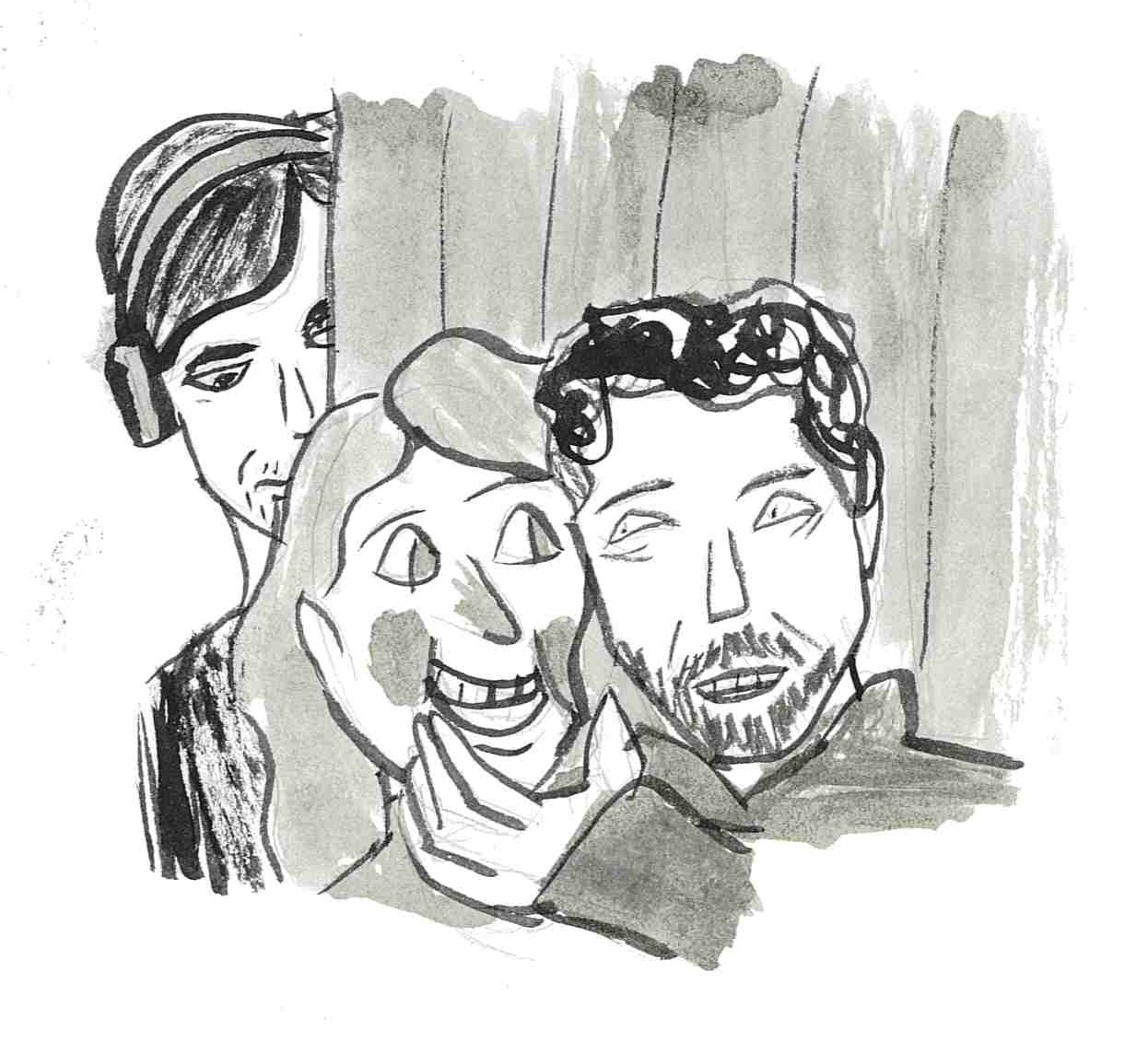
For the first half of the film’s three-hour run, Fielder thoroughly documents the lives of Holmes and her partner Billy Evans, eventually going as far as taking up residence in their beachfront cottage for a front seat to their myriad legal and domestic dramas as they raise their two children and attempt to revive the Theranos brand with a new model of the blood-testing machine that begat Holmes’ downfall. This segment represents the thirty-four days before Holmes’ incarceration, and the horror-movie atmosphere is undeniable—Holmes and Evans are attached at the hip, limbs twining together as they murmur cryptic platitudes of love to each other, all while Fielder lurks in the dark corners of the idyllic wooden cottage, wearing his recording equipment and signature pained half-smirk.
The bluntness of Fielder’s comedy fully translates to his documentary approach, with every probing question designed to make his subjects feel as ill at ease as Fielder himself often seems to be. In a particularly memorable scene, he sits Holmes down to show her Abbott and Costello’s “Who’s on First?” bit, a somewhat futile attempt to explain to her how miscommunication occurs. Holmes doesn’t get it, and it seems there’s very little that she does get.
Rosy-cheeked and wide-eyed, toothy grin constantly on display, Holmes’ presence in the documentary is nearly a perfectly reversed version of Fielder’s. Every blunt question is met with violently cheerful responses from Holmes, her claims that she never lied about her device (and indeed, that she’s never lied in her adult life at all) reeking of a level of self-delusion that seems impossible for a supposed tech genius.
This demeanor becomes increasingly impossible for Holmes to keep up as her incarceration date rapidly approaches, and we see her fraying around the edges as reality closes in. Fielder accompanies her and Evans up to the very end of her stretch as a free woman…and then, to my surprise, even after that.
The second half of the film takes place with Holmes behind bars. Fielder, unable to record his scant interactions with her, recreates them with Amanda Seyfried. Seyfried, having played Holmes in Hulu series “The Dropout”, has her own strange relationship with the disgraced inventor, and embeds herself increasingly in the spiraling psychological drama.
This leg of the documentary is full of watershed moments and baffling developments, ones that are both impossible to emphasize in writing and best experienced within the scope of the film, so I’ll refrain from delving into excessive spoilers. While I don’t believe that knowing any of the events that take place will necessarily lessen one’s enjoyment of the film, I’d hate for anyone to experience less than the full impact I was privileged enough to experience when I went to see it on its opening day in theaters.
For any potential viewers, know that what you’re sitting down for is not strictly an incisive takedown of Holmes. If you’re looking for all of Holmes’ controversies to be acknowledged and interrogated, you’ll be left disappointed—a central point of interest is the way that Fielder slowly allows himself to be manipulated, questioning less and less as he falls under Holmes’ spell. If, however, you’re looking for a wildly winding, often harrowing dive into the psyche of the woman behind one of Silicon Valley’s most infamous catastrophes, Fielder’s film allows you to see more than you could have ever bargained for.

Leave a Reply