

Isaac Holt, Staff Writer
The U.S.-Mexico border has historically held the spotlight as a major concern for national security, for decades drug and arms trafficking have been among the major policy points for the U.S. and Mexican governments’ actions towards the border and broader immigration dynamic.
Despite this historic trend, significant attention has recently shifted to the U.S.-Canada border – a change that partially reflects the new state of immigration in the United States and the government’s policy. The Department of Homeland Security (DHS), among other government agencies, has recently drawn attention to possible terrorist threats at the U.S.-Canada border and the potential for terrorist groups to take advantage of the ongoing immigration boom and the complex responses to it to attack the United States.
Every year, the DHS publishes its Homeland Threat Assessment, a report that summarizes major threats to the homeland for the upcoming year. The DHS 2024 Homeland Threat Assessment specifically points out the steep rise in individuals on the Terrorist Screening Database encountered trying to enter through the U.S.-Canada Border in the past year. The report states that due to the current immigration situation at both borders, “terrorists and criminal actors may exploit the elevated flow and increasingly complex security environment to enter the United States.”
The Terrorist Screening Database (TSD) is a watchlist maintained by the FBI for identifying and tracking known or suspected terrorists (KSTs). In the aftermath of the 9/11 attacks the TSD was created to enable the U.S. Government to have a single watchlist for tracking terrorist threats to the U.S. and its allies.
As of the latest declassified information in 2017, the TSD had roughly 1.1 million individuals on it, of whom almost 5,000 are U.S. citizens. Individuals on the TSD are monitored by agencies like the FBI, CIA, and Border Patrol when traveling either within or to and from the United States. While it is commonly thought that anyone on the terrorist watchlist is banned from flying in the U.S., only a very small subset of those on the TSD are on the separate, smaller, No-Fly List.
Originally, the TSD was primarily meant to streamline efforts to track suspected associates of al-Qaeda and its affiliate groups. Recent expansions of the TSD have included individuals who are defined as “known associates of watchlisted individuals, such as family members” according to the DHS. This expansion is consistent with the U.S. Government’s national security policy following the 9/11 attacks of considering terrorist affiliates and associates legally the same as the terrorists themselves. Terrorist threats have evolved immeasurably since 2001, this has required the FBI and other agencies to adapt to their counterterrorism policies and with them the Terrorist Screening Database.
This past fiscal year (2023), the DHS reported that the number of individuals on the TSD trying to enter the U.S. from both borders doubled from the previous fiscal year, as it had and again in 2021. Looking at the U.S.-Canada border, there were 54 encounters with individuals on the TSD in 2021. In 2022 this number increased to 313, in 2023 this number increased to 484 compared to just 80 at the US-Mexico border. Prior to 2021, the number of encounters has never been above 300 and has rarely gone over 200. It is important to note that these numbers are only from encounters at border crossings, they do not include encounters between ports of entry at illegal crossings.
The spike in KSTs being encountered at the border has prompted responses from not just Homeland Security, as some members of Congress who are already in political battles over the U.S.-Mexico border are now making calls for the government to better address the potential threat at the U.S.-Canada border. The U.S.-Mexico border has been a focal point for nearly every recent presidential administration and as such the U.S.-Canada border, while not ignored, has been relegated in many regards to its security and immigration procedures.
The recent trends at the U.S.-Canada border are concerning, the number of KSTs trying to enter the U.S. has never increased this much and in such a short period of time. Despite this, there are many different aspects to consider when looking at this sudden increase in KSTs trying to enter the US. The number of encounters is the number of times CBP has detained, deported, or taken similar actions against migrants in the U.S. From 2021 to 2023 encounters at the U.S.-Canada border increased from 27,180 to 189,402, a 7x increase. This surge in immigrant encounters at the U.S.-Canada border has been matched at the U.S.-Mexico border, which has seen a double in encounters since 2021.
Homeland Security has only recently made public its concern over the rise in KSTs being encountered at both borders, it is likely that as time goes on both the situation and the government’s response to it will change in scale and complexity. Events like these are important to adequately address, however, you can’t discern the possibility of a terrorist threat solely from a data trend. The nature of anti-terrorism policy is always changing, and terrorist groups across the globe are constantly adapting their methods of infiltration and attack, something that can have untold effects on immigration dynamics and policy.
For the U.S. and the entire world, immigration has been an enduring point of both confrontation and unity for centuries. Currently, the United States is facing a pivotal point in its border security policy, possible KST threats are just one of a spectrum of problems the country will have to face in the ongoing situations at both borders. The government’s policy towards immigration will have to address not only national security but also social, economic, and political factors that contribute to immigration and its broader effects.
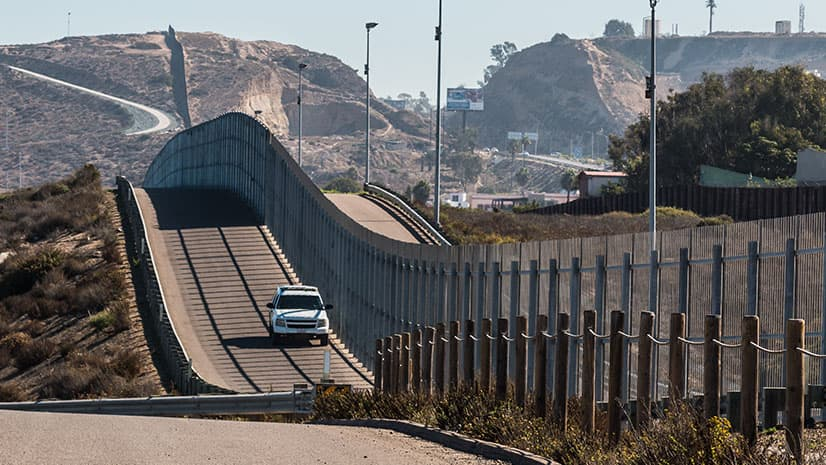
Featured Image Credit: ESRI

Leave a Reply