

Joya Saxena, Staff Writer
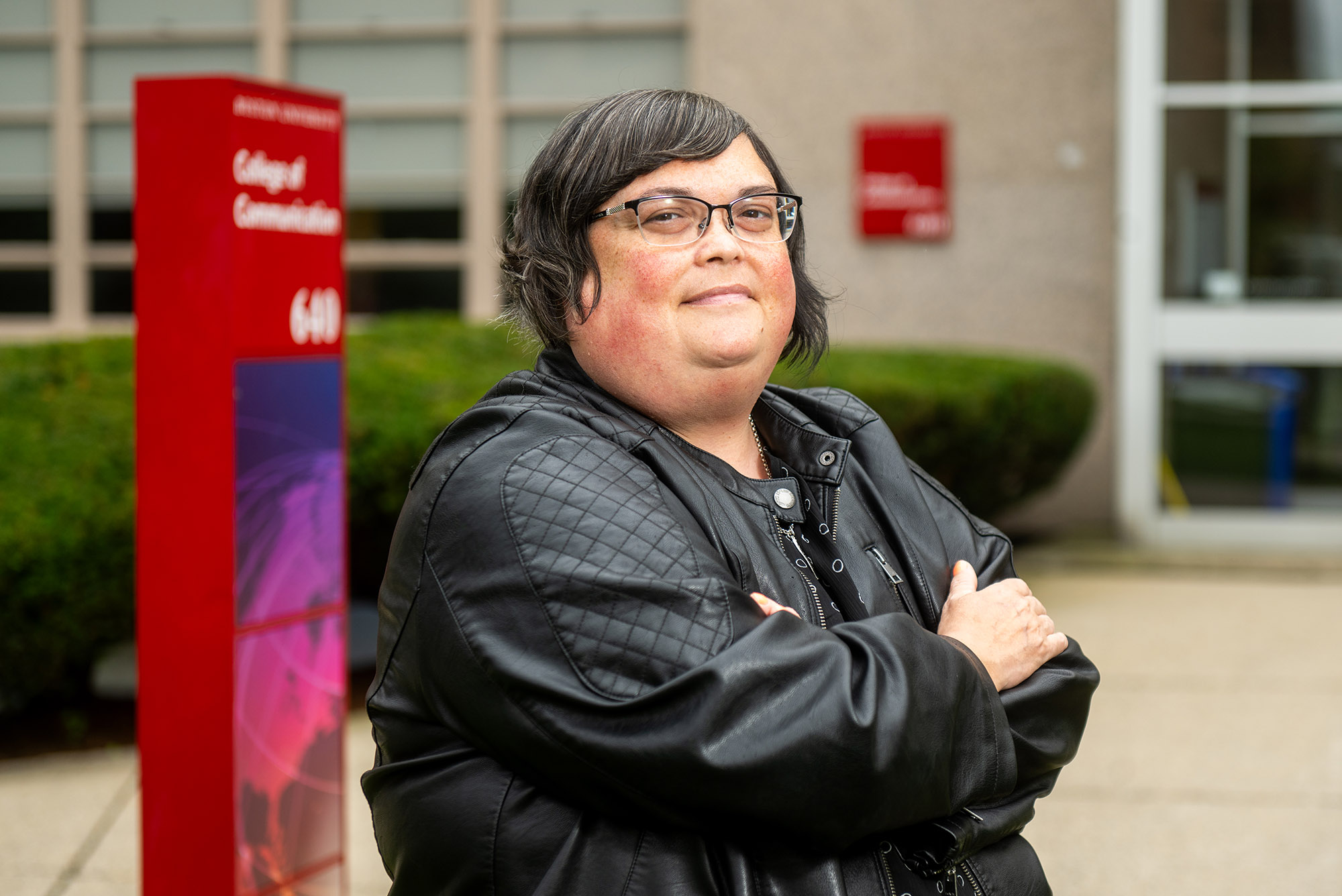
This past week, Beloit College had its 24th Annual Weissberg Chair Residency. This year’s theme was Misinformation and Media Literacy and our Chair was Dr. Joan Donovan. Dr. Donovan is an Assistant Professor of Journalism and Emerging Media Studies at Boston University, founded a nonprofit organization that advocates for public interest in the Internet, and co-authored “Meme Wars: The Untold Story of the Online Battles Upending Democracy in America.”
Dr. Donovan studies how media manipulation is a means to control public conversation and can be used to derail democracy. She conducts research, develops methods, and facilitates workshops for journalists, policymakers, technologists, and civil society organizations on detecting, documenting, and debunking media manipulation campaigns.
Dr. Donovan was the former Research Director of the Harvard Kennedy School’s Shorenstein Center on Media Politics and Public Policy, where she directed the Technology and Social Change Research Project. This project largely centered on media manipulation, disinformation, and adversarial media movements and published the Media Manipulation Casebook. Dr. Donovan’s academic research can be found in peer-reviewed journals and books. Dr. Donovan has been publicly recognized for her scholarly work by mainstream media such as MIT Technology Review, NPR, Washington Post, The New York Times, Rolling Stone, and The Atlantic.
On Monday, March 18, there was an exhibit at the Wright Museum of Art called “Memes at War.” The opening reception showcased visual propaganda from multiple national contexts in the 20th century, be it China, Japan, Russia, or Spain, as a precursor to the digital forms of media manipulation we see today. The exhibit was put together by Beloit faculty and showed how media manipulation is not a new invention.
Dr. Donovan spent the week visiting classes and having conversations with students about disinformation. She visited Beth Dougherty’s Human Rights Advocacy class, where students asked Dr. Donovan questions about social media, misinformation, and the best ways to educate ourselves to prevent media manipulation.
The Weissberg Chair keynote lecture took place on March 19, fittingly in the Weissberg Auditorium in the Powerhouse. Dr. Donovan walked onto the stage with a Salt-N-Pepa walk-up song, after which it was revealed she is a punk singer, and also creator of the beaver emoji. She engaged the audience with humor and wit as she discussed the ways social media has matured over the years and has mutated into a platform for political unrest. Dr. Donovan explained what she calls net wars: “Deployed across online territories, not necessarily bound by borders or governed by proper juridical power where all laws or regulations are not often enforced. The power structure of meme wars is not like our political power structure. It’s governed by corporate terms of service, not the state. Resources are not just monetary instruments but the ability to scale, deploy, and command large groups across vast spaces and statuses. It imposes a reality through media manipulation and the use of metanarratives. It gives rise to a new power elite while eroding democratic institutions.” Essentially, this exemplifies the privatization of the Internet and how it has changed the way we view the press and democracy. Dr. Donovan called for biometric privacy laws, which require businesses to track and inform employees and/or consumers about where their information is going and provide ways for them to consent to their information being shared.
Later that week, Dr. Donovan hosted a workshop for students, where they were challenged to create a product that they would have to sell to venture capitalists. In the end, the venture capitalists picked the best product. Students played the role of creating a product that others would consume, with AI contact lenses being an example. This challenged students to think about technology and the ways it runs most of society today, and to think outside the box and see the possibilities of what AI can mutate into as time goes on.
Veronica Kaluta‘26 says, “Dr. Joan Donovan’s insights on meme warfare opened my eyes to the hidden power of digital narratives, urging us to approach online information with a critical mind.”
Featured Image Credit; Boston College

Leave a Reply