

By ALIVIA RENTERIA
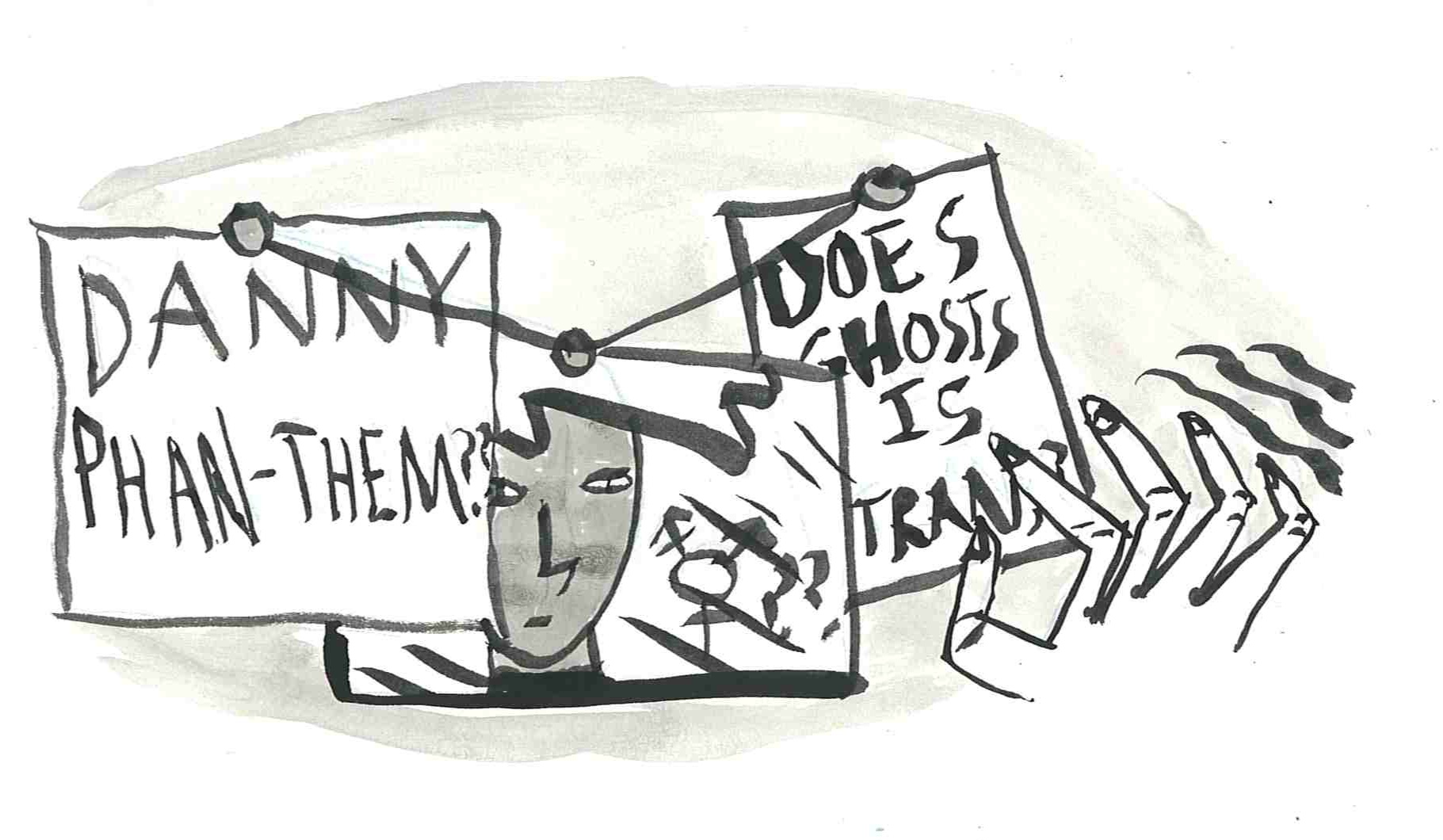
Danny Phantom, the main character of a popular early 2000s cartoon by the same name, is often considered something of a transgender icon in many online social circles, despite that fact never being canonically established. In fact, Butch Hartman, the creator of this show as well as “Fairly Odd Parents,” has been vocal in his dislike of LGBTQ+ people and trans identities in numerous posts across social media.
So, how did a man who prides himself on upholding traditional “Christian” values manage to create what is objectively one of the most queer-coded characters in modern media? Creating storylines and situations that trans kids and teens watching from home were able to relate to their own experiences seems to have been entirely accidental.
In a day when good queer representation is so hard to find, it’s easy for headcanon to be a large part of the online fandom experience. If you look up “Trans Danny Phantom” on a fandom-heavy site like Tumblr or AO3, you’ll be led to a never ending sea of posts theorizing and speculating on the fictional teen hero’s gender identity.
While headcanon in a fandom can be fun, the true queer subtext lies in Danny’s life experiences and family situation, which mirror the experiences that many trans youth recognize as their own.
Danny Fenton (AKA Danny Phantom) is half ghost, half human due to a lab accident, and is able to transform between the two forms at will. This metaphorical death of a former self alongside the stress of keeping this other half of himself hidden from his family and classmates is where fans interpreted an underlying theme of personal identity.
A great episode to look at when considering this is season 1 episode 9: “My Brother’s Keeper,” in which Danny’s sister, Jazz, discovers his secret identity as the ghost hero of their town. She is initially very worried that Danny is not acting like himself, going so far as to arrange for him to meet with a teen therapist.
At the point in the episode where she witnesses Danny transform, she is immediately shocked. She begins pushing him to talk to her, leading to an uncomfortable encounter with their ghost hunter parents in which they express to the children their desire to find and capture the episode’s villain-of-the-week ghost in order to, “peel that ghost like an onion,” and, “examine the remains.”
Ignoring the fact that this show introduced many children to the concept of vivisection and filicide, this scene in particular really highlights the danger the protagonist would face if his parents were to discover his true identity. Hence: closeted ghost.
From this point on in the show, Jazz acts as a hidden guardian for Danny, protecting his secret identity and providing alibis without letting on that she knows anything.
While no trans person’s experience is the same and this animated show was definitely not intended for the purpose of providing LGBTQ+ representation, it is truly awe-inspiring to see just how many people resonate with Danny’s story.
Media is able to inspire its consumers and serve as a creative outlet to lead to self-reflection. If so many are able to see themselves in the perceived subtext of a show, who is anyone, including the creator, to say otherwise?
Featured image: Betty Cavicchia’28

Leave a Reply