

Picture this: I spot a cute girl with a shaggy wolf cut and a pink carabiner clipped on her jeans and docs across the cafe. I tell her I love her hair and ask for her number. Then I hear the dreaded phrase: “I’m flattered but I’m not into girls.” I’m left with my hope crushed and my gaydar confused. Why is it that fashion styles and accessories that were once hallmarks of the LGBTQ+ community are being adopted by cisgender and straight people?
Within recent months, queer influencers on social media have begun observing that queer aesthetics are becoming more popular with those outside of the community. TikTok user @notolsenchris called out to fellow gay people in larger cities, “We need to all get together and recalibrate our gaydars, because gays are looking straight and straights are looking gay. It’s getting hard to tell.”
Like many other subcultures, an important part of the LGBTQ+ community is the fashion. Fashion has been used to subvert conventions of gender and respectability within the community for decades. For example, lesbian butches of the 1940s and 50s dressed traditionally masculine to protest the “three-article rule,” an anti-cross-dressing law stating that women must wear at least three pieces of traditionally feminine clothing (history.com).
With the modern loosening of gender expression expectations and the decriminalization of cross-dressing, it is safer, more socially acceptable, and more accessible to push against tradition with clothing. It is no longer as intensely dangerous to wear clothing that challenges one’s perceived gender and thus has become less of a personal statement to do so.
Social media also plays a role in the popularization of LGBTQ+ fashion. Social media allows for all groups of people to share their lives and style in a quick and easy manner. Users are exposed to cultures they may have never had the opportunity to interact with otherwise. Fashion trends are pulled from all corners of the internet and change rapidly. Vivian Kopka’27 shares her view of the shift in personal style, “I think fashion used to be a statement of your person, but now it’s just a statement of wealth and ability to tap in with trends.”

While there are styles more synonymous with the LGBTQ+ community, it is important to note that there is a large intersection between queer fashion and fashion in the Black community. Both communities were heavily intertwined in the 1970s through the 1990s, forming solidarity and mixing of cultures. Clothing like baggy jeans, expressive jewelry, and bell bottoms are a few examples.
Aside from general style aesthetics, queer fashion includes more specific items of clothing of accessories called flagging. Flagging is the addition of community wide agreed upon pieces worn originally with the sole purpose of signaling your identity to other queer people. Often these items also express sexual preferences. Flagging is a way to visually connect with other queer people in the know. Some modern examples are lesbians clipping carabiners to the left or right side of jeans, gay men piercing their right ear, and asexuals wearing a black ring on their middle finger.
As more and more straight people begin to adopt queer styles and use flagging items purely for fashion, some LGBTQ+ community members voice their discomfort. Tess Hunter’27, who identifies as a lesbian, believes “It can be damaging if not done with the understanding that it is a part of queer culture.” She shared her frustration that trends taken from the LGBTQ+ community are often style choices that queer people were previously ridiculed for.
There is also a discussion of safety for queer people. Flagging was created to communicate not only that you are queer, but that you are also a safe space for other queer people. When straight people adopt queer styles, fashion no longer becomes a reliable indicator of a stranger’s tolerance. TikTok user @shanetaylorpretty posted “queer people have clothing codes for safety and then straight people use them for fashion. We have a problem when they attack us or become homophobic when we assume they are gay as well.” Autumn Green’23, a straight woman who describes her style as “looking very queer,” said she is constantly mistaken as a lesbian due to her style. While Green labels herself as an ally, with the rise in popularity of queer culture, not every person can be assumed to be so.
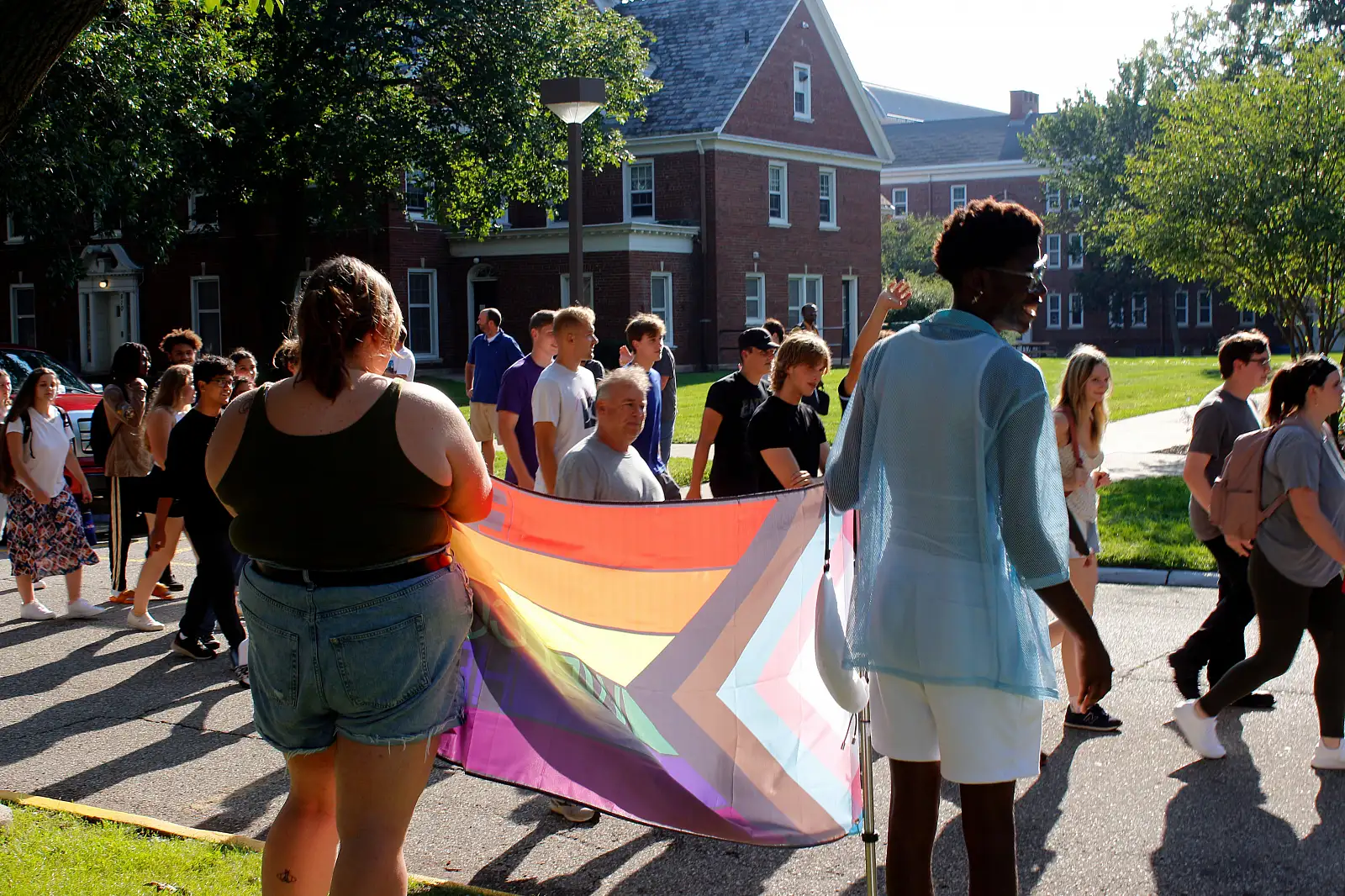
Featured Image: Beloit College

Leave a Reply