

This criticism is less about the principles behind restorative justice and more about how it is implemented in institutions. I also want to ensure that the student interns know that this is not directed at them. They are great.
It is a shame, really. The Day of Unity seemed primed as a day where the school could show off its restorative justice chops and provide a space for accountability, healing, and, well, unity. In the context of tensions at a breaking point between the students and the administration it was seemingly perfect timing.
Not everyone agreed with this notion, however. Upon speaking with multiple people who would be facilitators for the event, I was informed that housing, the topic at the center of the tensions, would be off limits for students to bring up. They were instructed to “shut down” or “deflect” anyone who brought the topic up. Puzzling. But not really.
Restorative justice is cool. I mean, I was an intern for the initiative. I do vibe with the principles that make up the foundation of the idea. I am also generally in support of anything that challenges the traditional structures and ideas of punishment/discipline. There is a problem with its implementation though.
In my mind, the scenario that creates the most potential for success for restorative justice is when a broader community adopts it and uses it as a tool for strengthening the bonds between people. It creates a space where everyone is on a level playing field, ensuring that no one and nothing is excluded. Ground up, not top down.
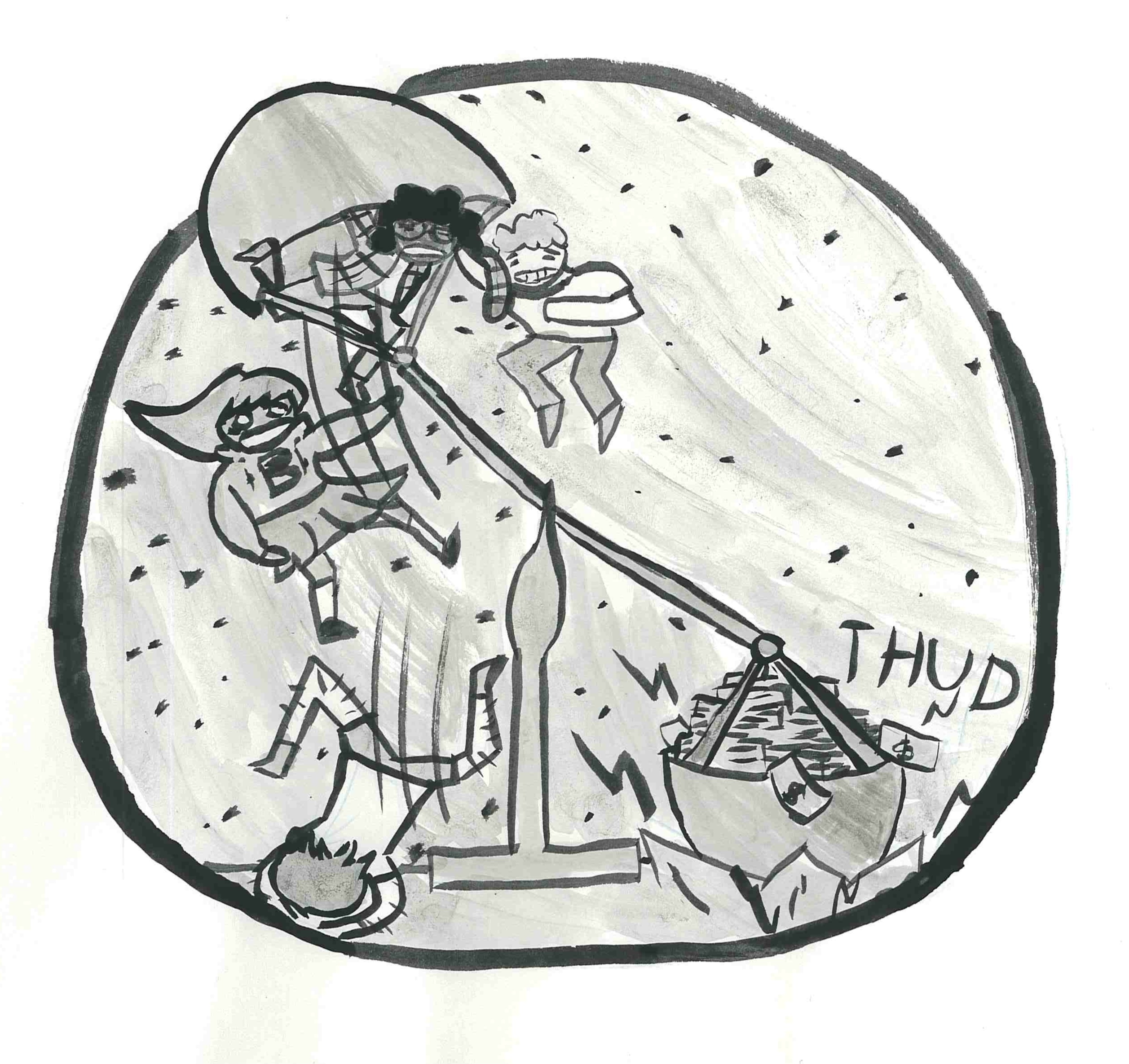
When it is implemented in a space that has such a wide power gap such as a college, it is much harder to make it effective. It essentially becomes another tool for the administration to wield to keep students placated, whether the administration is conscious of this or not.
They (the college administration) have all of the power in the initiative and therefore dictate how it operates, how it is marketed, what it is used for, who is involved, and anything else related to it. Not to mention that they are still obligated to maintain the typical disciplinary structure that will supersede restorative justice whenever they deem it necessary. The very nature of institutions undermines the core principles of restorative justice. And they wonder why students remain mostly skeptical.
When I was an intern, the idea that I was most excited about was potentially giving students a real seat at the table. Restorative justice could bridge some of the gap between the administration and the student body. It could give students an opportunity to voice their concerns and have a tangible effect on outcomes at the college that would strengthen the campus’ sense of community. I was rather naive, upon reflection.
I interpreted restorative justice principles in a vacuum rather than acknowledging the context that they were being implemented in. Those things would never be possible in an environment where the control of the initiative was entirely in the hands of the administration—the people with all the power already in college students’ lives. They always have the final say, which means meaningful change is never in the student’s power to make.
So what’s the point? Why have it at all? It does make us feel good about ourselves, sure. I personally have something compelling to put on a resume. It makes the school look nice and progressive. But it is not some real mark of progress or paradigm shift. It ultimately functions as another way to control students, just dressed up with a coat of nice language. It turns into glorified human resources, protecting the institution and making it look good.
If the school wants students to take something like this seriously, then it needs to be willing to share meaningful control of it with the students. It needs to be willing to allow students to have a real voice and their own tangible ways to make change. It needs to be something where the administration can be called to be held accountable for their actions. It cannot be something that the administration has full power over. Otherwise, it will continue to be mostly either ignored or joked about by students.
Completely censoring a topic makes it look even more pathetic. Clearly they do not have faith in its ability to handle remotely significant issues in the first place.
Featured image: Betty Cavicchia’28

Leave a Reply