

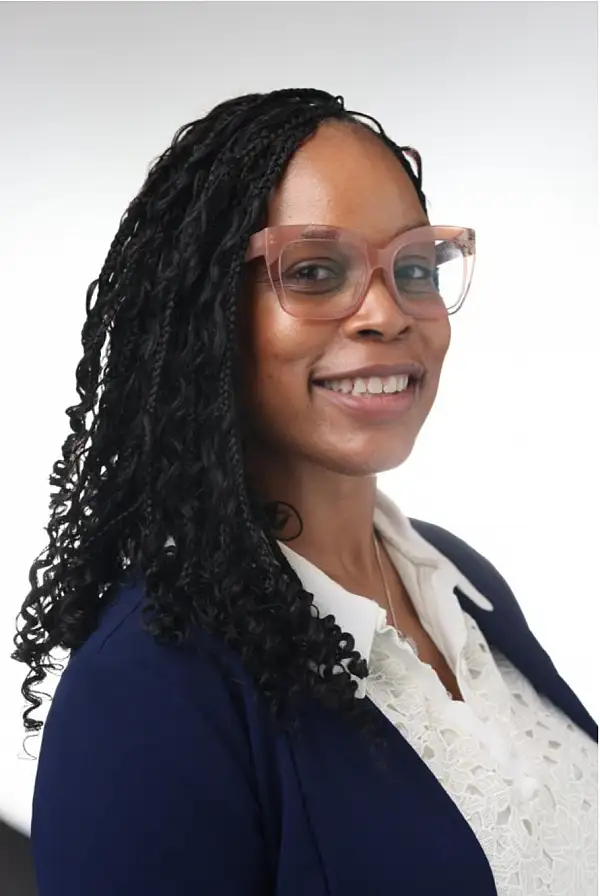
On Wednesday, Sept. 23, Ousley Scholar-in-Residence and Beloit graduate Jasmine Nears’09 hosted a panel with political science professors Gregory Koutnik and Klara Fredriksson, state senator Mark Spreitzer, and Wisconsin director of All Voting is Local Sam Liebert. The following day, Nears hosted a keynote address titled Democracy is a Team Sport. Both events were held to discuss methods of participation in our democratic system, as well as the future of the nation. The Ousley Scholar-in-Residence program celebrates the legacy of Black student graduates at Beloit who have committed themselves to social justice and reform. Nears, in addition to being this years’ resident, works as Chief of Staff at America Votes, a nonpartisan organization dedicated to increasing voter participation. I had the pleasure of an interview with Nears, where we discussed her journey and how it has shaped her values and practices in and out of work. Nears has long been an advocate for diplomacy and team-building, and wishes to use these methods to ensure that, every day, democracy has active participants looking to maintain and build up the nation, and ensure that the state serves the needs of the people.
To provide some background, Nears has been politically inclined all throughout her life, including childhood. In our interview, she described how early experiences set the stage for her path in life. “In middle school, I had just transferred to a school that only had pepperoni pizza for lunch. My mother had recently married a man who did not eat pork, and my whole family stopped eating it. I became aware of how some people didn’t have access to pizza, as they only had meat options. So, I went to the administration to get cheese pizza, and they told me if I could prove there was enough demand, maybe they’d consider it. So, I decided to start a petition. I went class to class to talk to students and get them to sign for more vegetarian options for those with restrictions. I collected around 300 signatures, and wrote a letter to the administration. They actually wrote me back, and added cheese pizza to the menu.” Early on, she steered her efforts to the needs of marginalized groups, and focused on voicing the needs and wants of the people. “It was an early time in my life when I saw the power of people, just doing something that they thought was right, and that’d just go and try and make change,” she said. “I think people were excited to make a change.”
Nears’ time at Beloit was also very meaningful to her. “When I was looking for college, I really had no idea where to start, but I knew I really wanted to go study abroad,” she said. “I also just had a really great talk with my admissions counselor. I liked that Beloit was small, too. Here, there were a lot of ways to get involved, know a lot of people, and do a lot of fun things in a small, more supportive environment.” During her time at Beloit, Nears was president of Black Students United and a McNair scholar. She was also able to study abroad in Turkey, where she pursued her interest in international relations. “I was mostly interested in human rights in international systems. I believed a lot in the United Nations and the International Court: the systems the world put together post-World War II to prevent a tragedy on that scale again. I was also interested in social movements, like how people in power change the outcome. I studied social movements in Turkey, here, and in South Africa, and the roles that everyone involved took.”
Across the world, oppressed people fought against their oppressors, and were often met with brutality. “Those really violent moments, a lot of times, are when the biggest changes happen, so I wanted to understand if we needed hard truths like that for things to move forward. My answer is: not always, but those are the moments in history where people pay attention.”
She continued with public administration as her area of expertise, and eventually, after graduate school, shifted toward domestic and local policy. Nears got a master’s degree in public administration at Wagner College, and went on to work with nonprofit Everytown for Gun Safety. She worked there for a short time before eventually landing a position with America Votes, another progressive nonprofit organization. Working within the coalition became a passion within itself, and helped to further her career. “Interacting with people was a lot about understanding their needs, as well as making sure they understood me, and making sure they got what they needed for the work they were going to do,” she said. “I stayed in my lane, and my lane is to help organize people in elections, supporting them so they can execute plans. I never had to step on anyone’s toes: we had a pretty clear mandate, and we were all able to maintain that trust by just doing it. For the most part, people were pretty receptive to sitting down and having a conversation.”
Nears had found her place, but had to create a network with her peers. “The hard part was helping people understand that there are laws for us to work together and create an opportunity to collectively push an issue forth. Those conversations were harder because people were used to staying in their lane. It’s important to remember that even if I or my organization has an idea, we have to meet people where they are, and recognize their concerns about trying something new, or finances and whatnot. But one of the reasons I stayed with America Votes for so long is because I loved the people I worked with. They’re very supportive. It was great to do something I love, and also feeling like I’m serving people in a positive way.”
“I want to see a system that works for people,” Nears said, as we finalized our conversation by discussing what we wished to see change. “I think there’s a lot of parts of our country that do work: we’re able to drive on roads, we have relative safety depending on where you live, we have education systems. People are experiencing, though, a breakdown of the American dream, in terms of being able to have a life that was better than their parents, and that’s sort of a tragedy. I see a lot of young people really having to adjust their expectations for the future, and I don’t think that’s healthy for society. I would love for my children, when they get to college, to believe that the impact they’re looking to have will make a difference, and the life they’re willing to create is possible.” We live in the crossroads of history, and more than ever, what we do will have major consequences for the future.
Featured image: Beloit College

Leave a Reply