

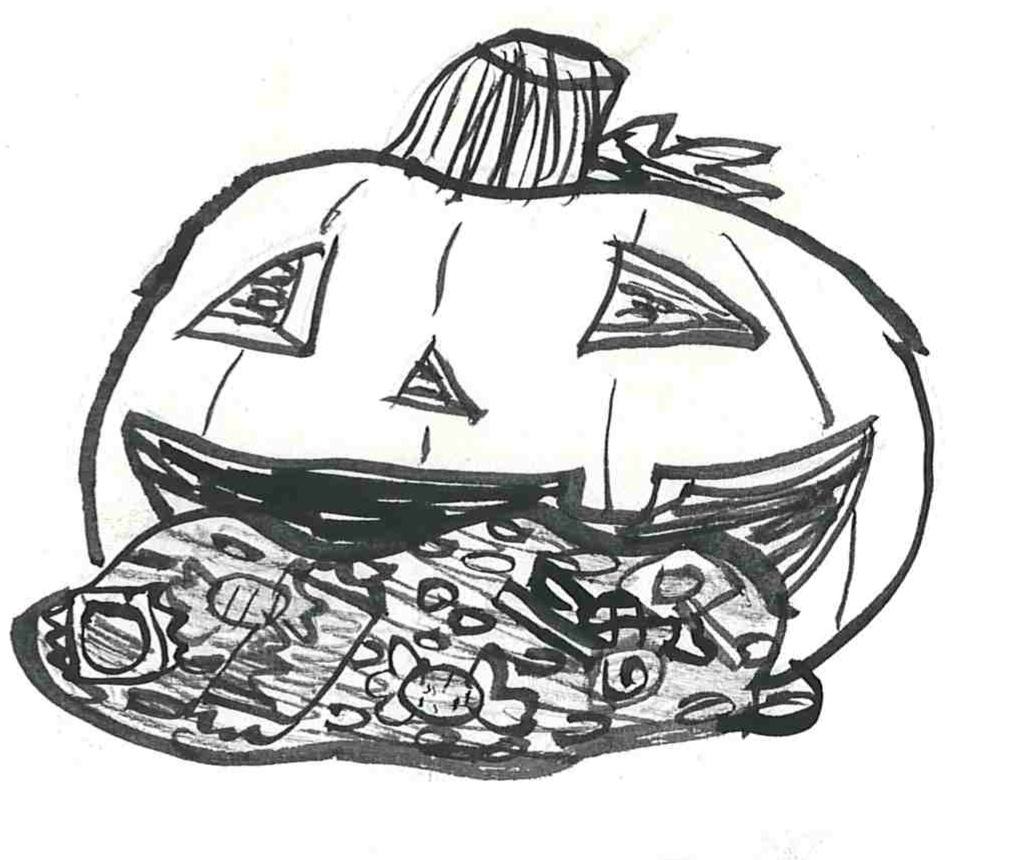
The scare we usually expect when Oct. 31 rolls around involves a ghost springing out of the dark or a clown hiding around the street corner. What we should fear, however, is far less fantastical: overconsumption. The waste of materials, resources, and space over the 24-hour period we call Halloween.
The first image you probably get when you hear about Halloween overconsumption is very literal: a guilty pile of wrappers on the kitchen counter by the end of the night, paired with a prominent stomachache. That is certainly a concern, as eating unfathomable amounts of sugar within 24 hours has disastrous effects on your body. However, before the candy falls into our bags, companies supercharge production in preparation for Halloween night. They rush to make as much candy as necessary to sell it en masse in your local stores, and with any bulk product comes overstock. Though many stores resort to huge sales to get rid of as much candy as possible, a lot of candy is just thrown out. The rest frequently ends up on the sides of the road, empty wrappers littering the ground.
Halloween costumes also create a parallel to fast fashion, as their production surges in the same way as candy production does, and is shaped by passing trends These single use, often polyester based costumes are cheaply designed to be thrown away. Microplastics shed from the synthetic plastic material and contaminate water sources. Rarely recycled and unsuited for any occasion beyond Halloween, costumes either amass in a basement collection or take up space in our landfills.
Even one of our favorite seasonal staples is scarily exploited. Pumpkins are grown for months in massive fields, cultivated by farmers’ expertise. When Halloween rolls around is when they all vanish. They are carved, painted, and turned into seasonal treats and beverages that exist for a limited time only. Any unused simply rot, wasting the effort put into their production.
Perhaps the most unexpected contributor is decor. It’s the foundation of the spooky aesthetics we love, what draws trick-or-treaters to our front door. But the quantity of them rarely matches the time they are in use. Decorations have evolved greatly over the years, from yard skeletons and creepy lights to full-blown animatronics and giant blow-ups. Over-engineering Halloween decor, especially to unmanageable sizes, consumes both valuable resources and space — they have to go somewhere when the season ends, after all.
To avoid overconsumption in our celebration of a beloved holiday requires consciousness of the way holiday production works. For that segment of the year, demand for seasonal goods is high, with projected spending on Halloween shopping in 2026 reaching $13.5 billion, according to the National Retail Federation. Consequently, the amount of waste increases. It is an unfortunate byproduct of consumerism that we have to navigate. Alternative, sustainable approaches can help to decrease the amount of waste and demotivate companies from overproducing. This includes DIY or repurposed costumes, consuming or composting pumpkins, buying only as much candy as you need, and reusing decorations.
There is nothing wrong with diving into the Halloween spirit, costumes and all, but we have to be careful to keep in mind what we leave behind once it’s over. The holiday may end after Oct. 31, but what we buy during that time doesn’t vanish with the end of the season.
Featured image: Betty Cavicchia’28

Leave a Reply