

By ELISA TURNER
This article contains spoilers for The Big Bang Theory, Young Sheldon, and Georgie & Mandy’s First Marriage.
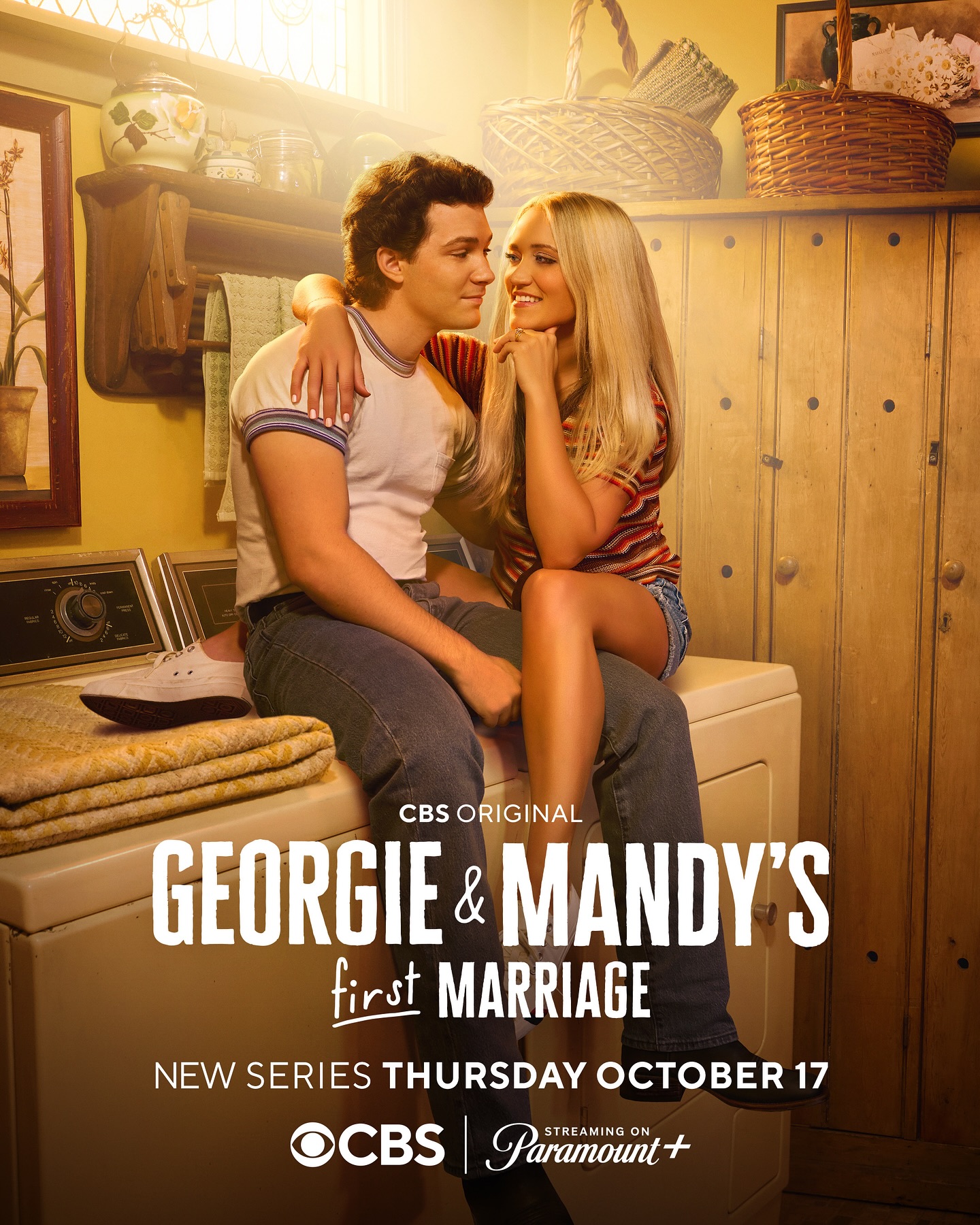
From the “Big Bang” to bazinga, the character of Sheldon Cooper needs no introduction. Created under Chuck Lorre as a part of the main cast for sitcom “The Big Bang Theory,” Sheldon is arguably one of the most popular examples of autistic-coded characters in media. Originally portrayed by Jim Parsons in “The Big Bang Theory,” then by Iain Armitage in spinoff “Young Sheldon,” Sheldon Cooper is a persnickety genius with a talent for physics and a difficulty in relationships. Between the spinoff and its source, though, his character and the characters around him are handled differently. While one is certainly more rooted in reality than the other, both shows have their aspects of appeal. Both of these, however, are absolutely shot to hell with the spinoff spinoff “Georgie & Mandy’s First Marriage,” a 22-episode backslide into the ninth ring of sitcom hell.
First played by Jim Parson in “The Big Bang Theory,” Sheldon’s character seems to be a coagulate of neurodivergent stereotypes mashed together. He’s a savant for all things math and science, his manner of speaking is overly formal, he lacks understanding of social convention, he breaks down relationships into something logical and formulaic in an attempt to understand them, he has an obsession with cleanliness and order, his entire life revolves around routine and he breaks down when that routine is deviated from, he hates change and breaks down whenever change occurs, he has a fascination with trains — and this is just the tip of the iceberg. Over the course of 12 seasons, Sheldon is repeatedly fleshed out to be an amalgamation of symptoms from the DSM-5. He is a caricature of autistic stereotypes made without input or comprehension of actual autistic people and instead entirely from the outside perspective of neurotypical people.
Absurd as the character is, he was a fan favorite from the start. Which was why the network greenlit prequel-spinoff “Young Sheldon.” Starring Iain Armitage’s Sheldon in his high school (and, later in the series, college) years, the Cooper family navigates suburban life in a tight-knit Texan community.
“Young Sheldon,” while inextricably connected to its source, does not live in the shadow of “The Big Bang Theory.” It took its own path. Producers abandoned the laugh track, put some damn good work into the cinematography, upscaled the writing quality — “Young Sheldon” did what its predecessor could not do. It pulled through where its precursor failed. It had the capacity to let a tone ring out. It held back its desire to go for the low-hanging-fruit of “point-at-the-neurodivergent-coded-guy-and-laugh” jokes. It grappled with the reality of integrating and accommodating for an absurd character like Sheldon within a sociocultural context that wanted to reject his existence at every turn. And with all of this, it was a smashing success. I’ve spoken with people who have never even seen “The Big Bang Theory” but have seen the entirety of “Young Sheldon.” Though it sometimes struggled to keep the Cooper canon intact, the show worked as a standalone and surpassed its source material.
This brings us, of course, to “Georgie & Mandy’s First Marriage.”
Now don’t get me wrong, I think Montana Jordan does a fantastic job as Georgie. He’s an excellent actor, as well as the rest of the cast for that matter. But what allowed him to shine in “Young Sheldon” can largely be attributed to how his character was juxtaposed next to Sheldon’s absurdity. But “Georgie & Mandy’s First Marriage” can only be described as Chuck Lorre’s manic relapse into chronic sitcom goon sessions. It brings back the laugh track, the oversaturated lighting, the mediocre cinematography, the low-hanging-fruit punchlines — it takes all the worst aspects of “The Big Bang Theory” and violently thrusts these burdens into the lap of Montana Jordan.
There are few positives about the show, so I shall list them here. First of all, the intro sequence is kind of a banger. The choreography of it all is genuinely pretty good. It’s got this tango-dance theme to it as the two titular characters perform a sultry sort of salsa throughout their suburban little house. The second good thing about this show is, building on the previous, the music. The Latin musical motifs sewn throughout a show set in East Texas is actually kinda funky and whimsical.
Now, let’s get into the not-so-positives.
By and large, it tries to recreate what made “The Big Bang Theory” iconic while simultaneously pulling in money from Montana Jordan’s performance. It tries to have its own neurodivergent-coded character similar to Sheldon, except he’s in his twenties and went into music. But he is intentionally not made to be likeable, and that is one constant throughout the show. Other than that, his characterization is largely inconsistent due to the fact that his entire existence is to be a pawn in the plot so that editors can throw in a prerecorded laugh track every three and a half lines. There’s also something vaguely Freudian about his relationship with his mother, which makes their dynamic hard to watch just about every time they’re on screen together. The incestuous undertones are simply not as funny as the writers seem to believe they are.
There are very few genuinely funny moments throughout this 22-episode clusterfuck. The greatest and most commonly used punchline is the very premise of the show– that Georgie lied about his age to have sex with an older woman. Seven times in one episode, by my count, does the laugh track play after the punchline “boy oh boy did I lie about my age and knock up an older woman.” The very premise is perhaps the one funny thing about the show, which can only narrowly dodge the inherent horror of the situation when followed by pre-recorded laughter. The idea is used as a snappy retort, an argument, a persuasive device, a punchline, and it simply doesn’t need to be restated that many goddamn times. The show is constantly trying to justify its own existence by leaning into the low-level shock value of its own premise.
To be clear, I have watched and enjoyed many a sitcom. But this 22-episode Cooper canon circlejerk of a cash grab pales in comparison to both of its predecessors. Had it been a standalone series, it would have been… fine, I guess. I suspect it would have faded into generic sitcom obscurity, but it would lack such a high bar to meet.
Its relation to the Cooper canon eliminates about half the tension in the show, too. Having watched its preceding shows, we as viewers know two things that will happen to Georgie: we know his career is fated to succeed, and his relationship with Mandy is doomed to fail (along with several other marriages that likely will not be explored). The latter manages to maintain its tension in a “doomed by the narrative” sort of sense. The former, however, manages to do the opposite. In the penultimate and final episodes of season one, much of the tension is formed by putting Georgie’s auto career in jeopardy. But through “The Big Bang Theory,” we know that Georgie will succeed in his career. When a relationship is doomed by the narrative, a viewer has a constant sense of impending doom that creates tension. But fating a character to succeed by virtue of the timeline is the worst possible use of dramatic irony.
In conclusion, they massacred my boy. Long live “Young Sheldon” and I pray to whatever obscure god might be listening that Montana Jordan can step out of the Georgie-esque typecast. He is a great actor and he deserved better. Whatever they fed the Young Sheldon writers, they gotta start feeding that to these fuckers. Thank you and keep it real.
Featured Image: IMDb

Leave a Reply